
Home / Services / Landscaping SEO

Landscaping SEO company

A Landscaping SEO Company That Chases Streets, Not Whole Cities

Moha is a landscaping SEO company for maintenance firms and design build firms. The difference here is route density: a customer two streets from an existing stop is worth several times one across town, so we build for the neighbourhoods you already serve rather than for the metro. We also keep what the site advertises inside what your licence and your applicator certification actually cover.

Thank you. We have your details and will send the audit back shortly.

Free, and no call required. We send back the neighbourhoods we would target first and why.

Built around your routes · Licence and applicator aware · Reporting on contracts won

A mower cutting a residential lawn
117,109 landscaping businesses in the United States, almost all of them local
117,109landscaping businesses in the United StatesCensus Bureau, County Business Patterns 2022
774,028people they employ between themCensus Bureau, County Business Patterns 2022
$1,000the California threshold above which the work needs a licenceAssembly Bill 2622, in force 1 January 2025
Every staterequires certification to apply pesticides for paymentEPA, and each state's own programme

The thing that makes landscaping different

Your margin is decided by drive time, so your SEO should be too

Every other trade we work with wants more customers anywhere in the metro. You do not. A crew that does nine stops on one street earns money and a crew that does nine stops across a county does not, whatever the invoices say. That single fact should change what an SEO plan targets, and almost no agency lets it.

The same nine customers, two different businesses Scatterednine accounts, most of the day in the vanROUTE 13.8 UNITSDensenine accounts, most of the day on a lawnROUTE 4.6 UNITS
Same number of accounts, same revenue per stop. The difference is how much of the day the crew spends in the van rather than on a lawn.

What that means for the keyword map

It inverts the usual target. Instead of fighting for the city wide term where every competitor and three directories already sit, we build for the specific neighbourhoods your trucks already pass. Those terms are far cheaper to win, and a customer won on one of them lands inside an existing route rather than adding forty minutes to a day.

The practical version is a page per neighbourhood you actually serve, written from that place: the lot sizes, the soil, what the HOA allows, what the houses around there tend to need. Not a template with the name swapped, which Google treats as duplicates. We have measured that happening on our own pages, where two were similar enough that their rankings got swapped with each other.

And it changes which jobs you say yes to

Once the enquiries start arriving by neighbourhood rather than at random, the ones that fit a route become obvious. That is a scheduling benefit as much as a marketing one, and it is the reason this work tends to show up in margin before it shows up in revenue.

Where we start

With your existing customer list plotted on a map. The neighbourhoods with three or more stops are the first pages we build, because a tenth customer there costs you almost nothing to serve.

If you do not have the list in a usable form, the audit works from your service area and whatever the Business Profile already shows.

Two businesses, one trade

Maintenance and design build are not the same company

Most firms do both, and the two halves want completely different things from a website. One sells a contract that renews every year for a few hundred dollars a month. The other sells a project that takes three months to decide and costs more than a car. A single page trying to do both does neither.

01 · Maintenance

The contract that renews

Low ticket, high lifetime value and decided quickly, usually in the Map Pack on Google Maps after a near me search. Google ranks that block on relevance, distance and prominence, and distance is measured from the customer, which is exactly why route density and ranking push in the same direction.

02 · Design and build

The project they think about for months

Researched the way a kitchen is researched, often by a couple, and won in the organic search results by whoever shows the most convincing work. This is where ordinary search engine optimization earns its keep: portfolio pages, process explanations, and an honest answer about what drives the price.

03 · Seasonal and one off

Clean ups, leaves, irrigation, snow

The work that fills the gaps and, handled properly, the cheapest route into a maintenance contract you will ever get. Snow and irrigation put you in the same seasonal bind our HVAC SEO service is built around. Somebody who books an autumn clean up has already let you onto the property and has already decided you are competent, which is most of the sale.

What we do

What a landscaping SEO company should actually do each month

SEO for landscaping companies comes down to ten things, run by one team against your routes rather than against a generic plan: neighbourhood pages, the Google Business Profile, keyword research, portfolio and image work, technical SEO, content, reviews, link building, AI search and reporting on contracts won.

The order comes from where your crews already are. Pages for the streets you already work get built first, because a customer there is profitable on day one and a customer forty minutes away may never be.

Two workers planting in a landscaped bed
01

Neighbourhood pages, built from the neighbourhood

Not city pages. A page for each area your trucks genuinely pass, written from what that place is actually like: the lot sizes, the soil, the slope, whether there is an HOA and what it allows, what the houses built there in a particular decade tend to need doing.

That material is what makes the page rank and what makes it convincing, and it is why generated location pages fail. Google filters near duplicates out of the index, and we measure the overlap between your pages before extending the set rather than finding out afterwards.

One page per real route areaWritten from local conditionsOverlap measuredBuilt in batches
02

Google Business Profile and the service area

Most landscaping firms have no premises customers visit, which makes you a service area business. Hide the address, set the service areas to the places you genuinely work, and accept that proximity still applies: a service area covering a county does not make you rank across it. The same twenty slots bind local SEO for a home services firm, with more trades competing for them.

The rest is category strategy and photographs. Pick the primary category for the work you actually want more of rather than the one that sounds biggest, complete the services, and keep uploading real job photos, because this is a trade where the profile is a portfolio. This is local SEO for a service area business in its hardest form.

Service area set properlyCategory for the work you wantReal job photosHours and seasons honest
03

Keyword research against your route map

Two inputs rather than one. The usual input is service crossed with place. The second is your existing customer list plotted on a map, which tells us which of those places are worth anything to you.

A term with three hundred searches in a neighbourhood you cannot service profitably is worth less than a term with thirty in a street you already work. That ranking is most of the value of a landscaping SEO strategy, and it is the part a generic agency has no way to do because it never asks for the list.

Service crossed with placeWeighted by route fitOne primary per pageQuery overlap checks
04

Portfolio pages and image search

This is the most visual trade on this site and the one where image search actually matters. People choose a landscaper by looking at work, and a gallery of unlabelled photographs is invisible to a search engine no matter how good the work is.

So each project becomes a page rather than a thumbnail: where it was, what the problem was, what was installed, how long it took, what it involved. Real file names, real alt text, images in the sitemap, and the before shot kept next to the after shot where you have both.

A page per projectDescribed, not just shownAlt text and file namesImages in the sitemap
05

Technical SEO for a photo heavy site

Core Web Vitals, mobile rendering, indexing, redirects, sitemaps and structured data. Landscaping sites fail Core Web Vitals more often than any other trade we work on, for one reason: hundreds of full resolution photographs loading at once.

Compressing and sizing them properly is usually the single biggest technical win available, and it is invisible to you and decisive to Google. The rest splits the usual way, the on-page SEO that makes each page worth ranking and the off-page SEO that gives the domain enough weight to hold a position. On top of that goes the service area markup, which has to say plainly where you work without claiming an address customers will drive to.

Image weight fixedCore Web VitalsService area schemaCrawl and index fixes
06

Content that answers the price and the plant questions

Two kinds of question, and most landscaping sites answer neither. What does a patio of this size cost and what drives that number. And what actually grows here, which is a local question with a local answer that national content cannot give.

A content strategy built on those earns organic traffic that converts, because somebody asking what survives a north facing bed in your climate is a customer rather than a reader. It is also the content marketing that keeps working years later, unlike a seasonal tips post.

What drives the priceWhat grows hereAnswer first structureContent calendar
07

Reviews, and getting the street named in them

Reviews move rankings and they move the choice between you and the next van. In this trade they do something extra: a review that names the neighbourhood is a relevance signal for exactly the area you want more work in.

So requests go out at the end of a job, by text as well as email, and they ask in a way that gets the customer naming the service and the area naturally rather than reciting a script. Every review gets a reply in your voice, including the ones about a crew turning up late.

Requests after every jobArea named naturallyReplies in your voiceMonthly review report
08

Citations and local link building

Citations first, because the details have to agree everywhere Google looks: name, address if you have one, phone, service areas and any licence number your state requires. A mismatch quietly costs trust long before anybody notices a ranking has slipped.

Then backlinks from sources that exist in your market: suppliers and nurseries, the trade associations you belong to, garden clubs and shows, the HOAs and sports grounds you maintain, local press when you do something worth covering. We do not buy links or use networks.

Citations including the licenceSuppliers and associationsHOA and community linksRisky link review
09

AI search optimization for AI Overviews and ChatGPT

Assistants now field the questions that used to start a search: what a paver patio runs to, what will grow in shade at this latitude, whether a dead looking lawn is recoverable. Moha is an AI powered agency, so this is inside the retainer rather than beside it, and no part of it involves submitting your site anywhere.

What gets quoted is substance from a business whose details agree everywhere. One of our already named by the AI answers, and the method behind that transfers directly to a page about what drives the cost of a retaining wall.

Answer first structureEntity consistencyAI visibility checksLocal specificity
10

Reporting on contracts won, by area

Calls and sessions are not the product. In this trade the number that matters is how many new accounts landed and where they are, because an account inside a route is worth several times one outside it and a traffic chart cannot tell you which you got.

So we report enquiries and signed accounts by neighbourhood and by job type, maintenance against design build against one off, with the conversion rate of each page underneath as the explanation for where the leads moved. Anything not working gets named rather than averaged away.

Accounts by neighbourhoodSplit by job typeRoute fit notedNext month's plan

Work you can check

Results you can verify

Ask any landscaping SEO agency which tool produced the number and which dates it covers. Our case studies name both, and the first is the same machinery that builds neighbourhood pages for a crew.

Service area business

Ranking in places the business never had a page for

Pages built per location from real data, which is the same build a landscaper needs for the streets they already work.

How the route pages were built
Outranking a national brand

A local operator holding results a national brand wanted

The profile rebuilt from scratch, content aimed at the questions a buyer actually types, and reach pushed out one area at a time.

How a local brand held the map
Named by the assistants

Getting a client quoted inside Google's AI answers

Business details reconciled across the web, crawl faults cleared, the content rewritten to answer rather than to sell.

How the clinic got named

The market you are in

117,109 landscaping businesses, and the barrier to entry is a truck

The Census Bureau counts 117,109 landscaping businesses in the United States employing 774,028 people, which makes it the fifth largest category in this comparison and larger than plumbing and HVAC. The difference is that a great many of those businesses are one van and no website at all.

How many businesses compete in each profession Law offices166,972Estate agents165,585Dental offices136,140Residential remodelers133,345Landscapers117,109Plumbing and HVAC109,601Auto repair84,101Electrical contractors81,842Chiropractors40,179Roofing contractors24,532
Source: U.S. Census Bureau, County Business Patterns 2022, establishments by NAICS code. Landscaping services is code 561730.

Which cuts both ways

A low barrier to entry means a crowded market and it also means most of the crowd is not competing with you online at all. In a typical suburb, a handful of firms have a real website and the rest have a profile with four photographs from 2019.

That is a genuinely easier position than a dentist or a law firm faces, and it shows in the numbers: the whole market for landscaping SEO services sits at a difficulty of between 5 and 20, against 21 to 35 for law firms. The work is not harder here. It is just rarely done.

The real competition is the directories

At the top of the broad city terms you are usually up against lead sellers rather than other landscapers. They cannot show your work, cannot answer what grows in a shaded bed, and cannot name a street. Those are the openings.

Only in this trade

What your website may advertise is narrower than what your crew can do

Landscaping is licensed in a way that catches people out, because the line does not fall where you would expect. Mowing a lawn generally needs nothing. Spraying it for weeds needs certification in every state, and building a wall in California above a dollar figure needs a contractor licence. A website is advertising, and advertising is where the rules bite.
Weed control, fertilisation and anything you spray

Under federal law and every state's own programme, applying pesticides on land you do not own, for payment, makes you a commercial applicator and requires certification. That covers a residential lawn. Herbicide for weeds and most grub and insect treatments sit inside it, and certification has to be renewed, typically every few years.

Which matters here because a services page listing weed control, fertilisation programmes or pest treatment is advertising a service that requires a certified applicator. If your certification covers some of those categories and not others, the page should say what you actually do rather than the full menu a competitor's template happened to list. Pest control companies carry a further layer, a state rule on how treatments may be described, which we set out as the pest control rules on safety claims.

What we do with it

We ask which categories you and your staff are certified in before writing the services page, and we write to that list rather than to the industry standard one.

This is how we build your pages. It is not legal advice, and your state's department of agriculture governs. The categories and the renewal cycle vary by state.

California, where the threshold moved in 2025

California requires a contractor licence for work above a dollar threshold, and that threshold changed recently. The Contractors State License Board operates the C-27 Landscaping classification, and under Assembly Bill 2622, in force from 1 January 2025, the minor work exemption rose from $500 to $1,000 in combined labour and materials. Two conditions come with it: the job must need no permit of any kind, and you must not employ anyone on it.

Hardscaping, grading, irrigation installation and tree removal land squarely inside the licensed side of that line, which is most of what a design build firm sells. And advertising work in a classification you do not hold is a misdemeanour under Business and Professions Code 7027.1, which expressly covers directory listings, meaning your Google Business Profile services list is in scope.

The combination that catches people

A maintenance firm adds paving to its services page to catch the searches, has no C-27, and has now advertised licensed work it cannot legally take. The searches were real. The exposure was avoidable.

Section 7030.5 separately requires the licence number in all advertising, which is why it goes in the footer and in the profile rather than on the contact page alone.

What this looks like in the other states we work in

The pattern repeats with different thresholds and different names. Florida requires the registration or certification number in each advertisement regardless of medium. Maryland requires the name and the licence number in every home improvement advertisement. Texas licenses irrigators separately, so installing or repairing a sprinkler system is regulated work even where the landscaping around it is not.

None of this stops you ranking. It decides what the pages are allowed to claim, and it is far cheaper to settle before the site is written than to unpick afterwards. We check your state during the audit and tell you which services we can build pages for and which need a conversation with your licensing board first.

Worth knowing

If you work across a state line, the stricter rule governs what the website says, because one site serves both markets and a search engine does not know which one the reader is in.

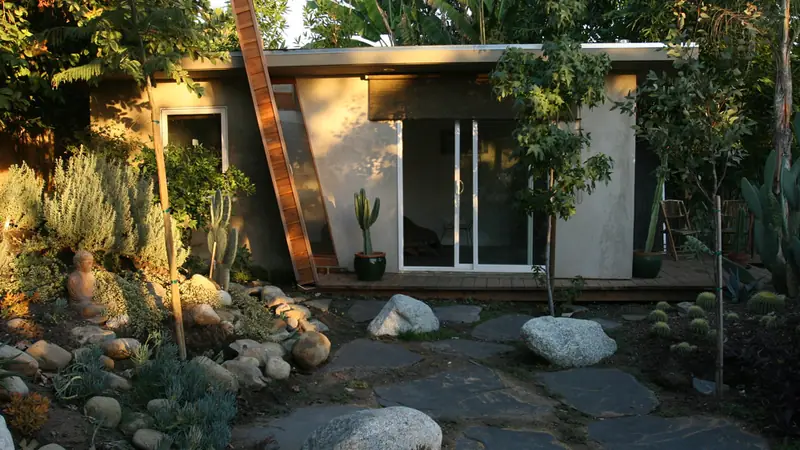
A planted and paved garden beside a modern house
Why Moha

Why firms choose Moha as their landscaping SEO agency

The standard offer in this trade is a city page and a traffic chart. Both miss the point when drive time is what decides whether a job earns anything. We build to the routes you already run, keep the contract work and the project work apart, and count accounts by area. Behind that are landscaping SEO experts rather than a reseller, and the strategist you deal with is an SEO consultant who learns your map instead of an account manager relaying a report, with AI handling the repetitive end and nothing left for you to operate.

Built around your routes

We start from your customer list on a map, not from the biggest term in the metro.

Licence and applicator aware

The services page says what you are actually certified and licensed to do, not the full industry menu.

Your work is the content

Projects become pages rather than thumbnails, with the image work that makes them findable.

Duplication measured

We check how similar your area pages really are, because we have watched that failure happen to our own.

Nothing for you to run

No portal, no posting schedule, no homework. The work happens whether you are on a job or not.

Leave when you like

Long enough at the start to judge the work fairly, and no notice period holding you after that.

How it works

Our landscaping SEO process

Routes and licensing first, then the areas you already work, then the project work that pays for the year.

1Week 1

Audit, routes and licensing

Your site, profile, reviews and competitors, your customer list plotted on a map, and what your licence and applicator certification actually cover. The findings are yours either way.

2Weeks 2 to 4

Foundations

Keyword map weighted by route fit, service area set properly, categories, image weight fixed, licence number placed where it belongs, call tracking and a booking path we can measure.

3Months 2 and 3

Your routes

Pages for the neighbourhoods with stops already in them, written from real local conditions, plus review requests running on every job and the citations corrected.

4Month 4 on

Projects and reach

The portfolio built out project by project, the design build content that wins the big jobs, credible local links, and new areas added only where a route can absorb them.

Landscaping SEO pricing

What landscaping SEO costs with Moha

One flat monthly figure, quoted once the free audit is done. No charge per enquiry, no slice of a job. What moves the number is how many areas are in scope and whether the design build side is included. Nothing is subcontracted, and none of it is a lead that two of your competitors also paid for.

Launch
$3,000 /mo

For one or two crews working a handful of neighbourhoods.

  • One core service
  • Full strategy and setup
  • Done for you execution
  • Reporting by area
  • Dedicated strategist
See the Launch plan
Growth · most chosen
$4,800 /mo

When maintenance and design build both need their own plan.

  • Three services, kept in step
  • Both sides of the business
  • Work prioritised ahead of other accounts
  • Reporting by area and job type
  • Dedicated strategist
See the Growth plan
Scale
Custom

For multi crew operations or several branches. Franchised systems have their own version of this problem, and we cover franchise SEO for multi location brands separately.

  • Every channel you need, synced
  • Multi location coverage
  • Reporting by branch, area and job type
  • Dedicated strategist and named account team
Book a strategy call

Will SEO pay for itself for your company?

6.3new customers a month
$15,120first year value a month
5.0xvalue for each dollar spent
4enquiries a month to break even

At these numbers, SEO returns five dollars of value for every dollar spent.

Watch

Replying to reviews, from Google itself

In a route based business a review names a street as often as it names you, which makes the reply worth writing properly rather than firing off between jobs. Google's help channel covers finding and answering them. Getting the area named naturally, without putting words in a customer's mouth, is the part we run.

Questions

Landscaping SEO questions owners ask

Taken from what owners post in Google's Business Profile help community, on the Local Search Forum and in green industry groups, plus the phrasings people type into a search box.

Launch is $3,000 a month and Growth $4,800, with multi crew operations quoted individually. Measure it against a maintenance contract rather than a single visit: at a $2,400 annual contract, six new accounts a month already covers a year of the Launch plan, and those accounts renew while the cost does not repeat.

Because drive time decides your margin and the city term does not care where the customer is. Nine stops on one street is a profitable day and nine stops across a county is not, even at the same invoice value. Neighbourhood terms are also far cheaper to win, since the whole market and three directories are fighting over the city one. You will appear for the city term anyway as the area pages accumulate.

In several states, yes, and it depends on what you do rather than on what you call yourself. California requires the number in all advertising and makes advertising work in a classification you do not hold a misdemeanour, expressly including directory listings. Florida and Maryland have their own versions. Mowing usually needs nothing; hardscaping, grading and irrigation usually do. We check your state before the services page is written.

No. Applying pesticides on someone else's land for payment makes you a commercial applicator under federal law and every state programme, and that includes a residential lawn. If your certification covers some categories and not others, the services page should list what you are actually certified for. We ask for that list before writing it rather than copying an industry standard menu.

Same site, clearly separate sections, and genuinely separate pages, the same structure we set out in SEO for home services firms. They share a brand and nothing else: one is a few hundred a month decided in a day, the other is a project decided over months by two people looking at photographs. A page trying to serve both converts neither, and in search it competes with itself for two different sets of terms.

Profile and citation fixes can move within weeks. A neighbourhood page in a normal suburb often ranks in two to four months because so few competitors have one. The city wide terms and the design build terms take longer, six to twelve months, because that is where the directories and the established firms sit. Starting with the areas you already serve is what makes the early months pay.

Turn projects into pages rather than filling a gallery. A thumbnail grid is invisible to a search engine; a page that says where the job was, what the problem was, what went in and what it involved is findable and far more convincing. Real file names, real alt text, images in the sitemap, before next to after. Then compress them, because photo weight is the most common reason a landscaping site fails Core Web Vitals.

You do, without exception. Put the listing, the domain and the analytics in an account the company controls and add whoever you hire on top as a manager. The reviews live on the listing and cannot be lifted out of it, so a profile sitting in a former agency's account takes years of accumulated proof with it. If a prospective supplier will not work that way, they have just described what leaving them looks like.

No. Google wants the name you actually trade under, and adding "lawn care" or a town risks suspension of the listing and everything attached to it. It can also be a licensing problem where the name implies work you are not licensed for. Categories and services carry the keywords, and in this trade the category choice does more work than almost anything else on the profile.

They fill a gap and they are the opposite of route density. A bought lead is sold to two or three competitors and lands wherever it lands, which is how crews end up with a day of driving. They make sense while the organic work matures and less sense every month after, because SEO marketing for landscaping builds an asset you keep and a bought lead does not. We will tell you when the numbers say to wind them down rather than letting them run forever.

It is not something anyone can sell you, because there is no submission and no switch. Google's own documentation puts the requirement at being indexed, eligible for a snippet and actually useful. What that rewards in this trade is specificity: a page explaining what survives a shaded bed in your climate, or what makes one retaining wall cost twice another, gives an assistant a sentence worth repeating. A list of services gives it nothing.

No, and treat anyone who does as a warning. The map reorders itself for every searcher depending on where they happen to be, so a single "position" barely exists for a business without a storefront. What we will put in writing is the work itself, and the report counts signed accounts by area.

Start with the unit it reports in. Booked estimates and signed maintenance contracts by area tell you something; a traffic chart does not. Then ask whether the profile and the site stay in your name, what it does with the profile over the off-season, and whether it has done landscaping company SEO before, with numbers you can check. A good answer names the neighbourhoods it would target first and explains why. A keyword list with no places on it means the generic plan again.

Yes, and winter is when it should be built. What the profile itself should do over the winter is a separate question, covered in local SEO for landscaping, season by season. A page takes months to rank, so the content that wins you spring enquiries has to be live before spring arrives. It is also the only time of year you have the attention to supply the local material the pages need. Firms that pause marketing in winter restart every spring from the same position.

Not head on, and not on the city term. You compete where proximity is on your side, which is the streets you already work, and there a well built page with forty genuine reviews beats a distant competitor with four hundred. Review count matters less than most people think once distance is in play, which is the whole argument for building out from your routes.

Usually yes, and landscaping business SEO in a small town has better economics than in a city, not worse. A small market has fewer firms doing anything deliberate online, so the pages cost the same and meet less resistance, and route density is easier to achieve when the whole town is ten minutes across. The audit tells you the real volume for your area before you commit, and if it is genuinely too thin we will say so.

Free audit

Work with a landscaping SEO company that builds around your routes

Send the website over and you will get back a shortlist of neighbourhoods worth building first, a note on anything the site currently advertises that your licence or certification may not cover, and the handful of fixes we would do before anything else. If paid search should run alongside it, that is our SEO and PPC together.

Thank you. We have your details and will send the audit back shortly.

No call required.

Photographs, all Creative Commons Attribution, via Openverse: mowing a lawn by nenad53, planting by mypubliclands, and a finished garden by Jeremy Levine Design.