
Home / Services / Local SEO / Landscaping
Local SEO for landscaping companies
Local SEO for Landscaping Companies That Still Ranks When the Ground Freezes
Local SEO for landscaping companies has a problem no other trade has in quite the same way: for months of the year, many firms stop working. Google's guidance says a business closed for the off-season should be marked temporarily closed, and that for broad searches, temporarily closed businesses can rank after open ones. So the winter decision shapes the spring. We set up your profile for the season you actually have, choose the right categories, draw a service area Google accepts, and fill the map with the photographs that win the first calls of the year.
Free, and no call required. We check what your profile tells Google in every season.
Planned around your season · Categories chosen for the work · Reported on jobs won
The decision that shapes your spring
What your Google profile does in winter decides who gets the first spring calls
Google's help page on marking a business closed is short and specific. For a landscaping company that stops for the winter, it is the most important page on local SEO it will ever read.
What Google actually says
If a business is closed for more than seven days, closed for the off-season, or closed indefinitely, Google says to mark it temporarily closed. For closures of seven days or less, it says to use special hours instead. And it is candid about the cost: for broad queries, temporarily closed businesses can rank after open businesses, depending on the category, the type of search, and how many matching businesses are temporarily closed.
For a landscaper, the broad query is the one that matters: landscaping near me, lawn care near me, landscaper plus the town. A firm that marks itself closed from December to March may still be found by people searching its name, but for those general searches it can sit behind every competitor who stayed open. When the weather turns and the first homeowners start looking, the open firms are the ones they see.
Why most firms get this wrong in one of two ways
Some never touch the profile, so it shows normal opening hours all winter while the phone goes unanswered, and the first reviews of spring complain that nobody called back. Others mark themselves permanently closed by mistake and spend March trying to reopen. Neither is a ranking strategy.
If you genuinely stop for the winter, mark the profile temporarily closed. It is what Google asks, and showing open hours you will not honour costs more in reviews than it saves in rankings.
If you do real work in winter, there is a better option.
The better option, if it is true: stay open for winter work
Many landscaping firms in cold states do real work through the winter: snow removal and gritting, tree work while the leaves are down, hardscape and design consultations for the spring, holiday lighting. If your crews or your office genuinely work and answer through the off-season, the profile can stay open, with winter hours and the services you actually provide, and you avoid the broad query penalty entirely.
The test is simple. If a homeowner calls in January, does somebody answer, and can you do something for them? If yes, stay open and say what you do. If the answer is a voicemail until March, mark the profile temporarily closed and plan the spring around it.
Special hours for the gaps in between
Holiday weeks, a storm that stops the crews for three days, a week off in August: closures of seven days or less go in as special hours. The profile stays open, the closure shows on the dates it applies, and customers are not promised a service that will not answer.
Reopening early
If you do close for the winter, reopen the profile before the first warm week, not after it. Update the hours, add new photographs, post about spring bookings, and ask the customers you will see first for reviews. The firms that appear first in March are the ones that were ready in February.
We never recommend showing hours your crews will not keep. A profile that claims to be open in January and goes to voicemail earns the one star review that sits under your name all spring.
The setting that decides which searches you appear for
One primary category, chosen for the work you want most
Relevance is one of Google's three local ranking factors, and the primary category is the strongest relevance signal a profile has. Landscaping firms have several to choose from, and the right one depends on the work you want more of, not on everything you can do.
Maintenance firms and design build firms are different businesses
A company that mows, feeds and tidies three hundred gardens a week is a lawn care or maintenance business, and its customers search for lawn care near me. A company that designs and builds patios, planting and garden rooms is a design business, and its customers search for a landscape designer or a landscaper and then spend weeks looking at portfolios. The primary category should be the one that matches the work you most want, with the others added as additional categories only where you genuinely do them.
We do not change the primary category with the seasons. It is the profile's main relevance signal, the reviews you have earned describe that work, and switching it back and forth confuses customers who find you in one season and look for you again in the next. Snow removal is added as an additional category if you do it, not swapped in as the primary.
Categories and licences
Lawn care that includes fertiliser, weed control or pest treatment may need a state applicator licence, and what a firm may advertise follows what it is licensed for. The rules differ by state and are set out in our landscaping SEO for the website and licensing work. The profile should never list a service your licence does not cover.
Below the categories, the profile lets you list services. List the jobs as customers name them, mulching, hedge cutting, spring clean up, patio installation, so the profile can match the search even when the category is broader.
The business name, and the keyword temptation
The quickest way to rank, in the short term, is to add the services to the name: Green Acres Lawn Care, Landscaping and Snow Removal Springfield. Google's guidelines say the business name should be the name the business uses in the real world, on its sign, its trucks and its invoices, and that adding unnecessary information is not permitted and can lead to suspension. Competitors know this, and reporting a stuffed name is the easiest complaint in local search.
If your real name already says what you do, keep it. If it does not, the categories and services carry that information instead, and they do it without the risk.
Verification, and when Google asks again
Google may ask a business to verify again after significant changes, such as a new name, a new category or a move. For a landscaping company with no storefront, verification increasingly means a short video showing the business at work, a branded truck, equipment, tools, and proof that you run it. Plan changes for a quiet week, not the first week of spring, so that a verification request never takes the profile offline when the calls start.
Have the truck lettered, the equipment clean and somebody free to film. A verification video that shows the real business takes an afternoon. One that does not can take weeks to resolve.
What a homeowner sees
Three places a homeowner finds a landscaping company
Search landscaping near me in April and the screen splits into three, each won by something different.
Three firms on Google Maps
The local pack, ordered on relevance, distance and prominence. Your category, service area, reviews, and whether the profile shows as open decide your place in it.
Photographs that sell the job
For a visual trade, the profile's photos do more selling than its text. A homeowner tapping your listing wants to see gardens you have made, not a stock image and a logo.
Service and project pages
Below the map, pages about patio installation, garden design or lawn care plans in your area. This is where design work is often won, because the homeowner is researching, not calling.
Photographs are a ranking and a selling problem
Profiles with real photographs of real work give a homeowner a reason to choose, and give Google evidence of what the business does. A landscaping company finishes beautiful work every week and photographs almost none of it. We set up a simple routine: before, during and after photographs of each project from the crew's phone, uploaded weekly, with the town noted so they can be used on the right page.
Seasonal photographs matter too. A profile whose newest picture is last July's lawn looks closed in March. A profile showing this week's spring clean ups looks like the firm that will answer.
Posts that match the season
Profile posts are small, but they show the business is active and they let you say what you are booking now: spring clean ups in March, design consultations in winter, leaf clearance in autumn. One a week in season is plenty.
Search landscaping near me from a phone in your three best towns, then tap your own listing. If the photographs are not your work, or are more than a season old, that is the first thing to fix.
Taking spring bookings while the profile is closed
Marking the profile temporarily closed affects the profile. Your website still ranks in the organic results, and homeowners planning a new garden or a maintenance contract start looking in late winter, long before the first cut. Those leads are worth catching. A page for spring bookings, with what you offer, when you start and a form that works while the office is quiet, turns the off-season into a waiting list rather than a gap.
Design work is the clearest case. A homeowner who wants a patio and planting by June has to choose a designer in February or March. If your project pages and portfolio are in the search results then, the profile's winter status matters far less than you would think.
What to say on the site in winter
Say plainly that the crews are off until a stated month, that you are booking now, and how quickly you will reply to an enquiry. Homeowners do not mind waiting for a good firm; they mind not knowing whether anybody is there.
Add an automatic reply to the enquiry form for the off-season, giving the date you will be in touch. It keeps the lead warm and saves a review that starts with never heard back.
Where you tell Google you work
A service area Google accepts and your crews can keep
Most landscaping firms do not receive customers at their yard, so they are service-area businesses in Google's terms, and the service area is the profile's map of where they go.
What Google allows
Google's service area guidance allows up to 20 cities, postcodes or other areas, and says the overall area should not reach more than about two hours of driving time from where the business is based. It also says a business that does not serve customers at its address should remove the address from the profile, which matters for the many landscapers who run the business from home.
The service area tells customers where you go. It does not make you closer to them. Proximity still weighs heavily, so a firm will rank best near its base whatever the list says, and listing forty towns does not change that.
Maintenance routes and design projects reach differently
A maintenance crew that visits the same streets every week makes money from density, and its service area should be tight. A design build firm will drive an hour for the right project. If you do both, the service area should cover where you will take maintenance work, and the design work far away is better reached with project pages than with a longer list of towns.
We draw the service area from where your crews actually go, using last season's jobs. The towns you want to reach next go on the website first, and on the profile once you are working there.
The website, for a business with no storefront
The site should agree with the profile: the same business name, the same phone number, the same service area and, in season, the same hours. If the profile hides a home address, the site should not publish it either. A contact page that lists the towns you serve, with a phone number and a form, does everything a street address would.
Structured data, the LocalBusiness schema behind the page, should match as well: the business name, phone, the areas served rather than a home address, and the seasonal hours updated when the profile's are. It is a small file that nobody sees, and when it contradicts the profile, it quietly undermines it.
When winter hours change on the profile, change them on the site, in the schema and on the main directories the same week. Hours that disagree are the commonest mismatch we find.
What we do
What local SEO services for landscaping companies should cover
Ten things, planned around the year rather than the month, because a landscaping firm's map needs different work in each season.
An off-season plan for the profile
The decision made deliberately: temporarily closed for the winter, or open with real winter services and hours. Special hours set for holidays and storm days, and a reopening date planned before spring.
Categories and services set
The primary category chosen for the work you want most, additional categories only for what you do, and the services listed as customers name them.
A service area drawn from real jobs
Last season's jobs mapped, the service area set within Google's limits, and the address removed from the profile if customers do not visit you.
A photograph routine for the crews
Before, during and after photographs from every project, uploaded weekly, with the town recorded. The most persuasive content a landscaping company has, and the most neglected.
Reviews at the right moments
A request at the end of each project, and for maintenance customers at the first cut of spring and the last visit of autumn, when they notice the work most. Review replies that thank them for something specific.
Posts for each season
A simple calendar of profile posts: spring clean ups, summer maintenance plans, autumn leaf clearance, winter design consultations or snow work. Short, real and in season.
Citations that agree
Name, address and phone the same everywhere, the NAP set, across directories, home service platforms and data aggregators, with seasonal hours kept consistent so no directory shows you open when you are not.
Service and project pages
Pages for the work you want, built from your projects and keyword research for how homeowners in your area search for it. The organic results are where design work is researched and won.
Local links from the places you work
Garden centres and suppliers you buy from, the local horticultural society, the community gardens and schools you help, and local press when a project is worth showing. Local links feed prominence, and they are never bought.
Reporting on jobs won, by season
Calls, forms and booked jobs from the map and the site, split by maintenance and project work, with the conversion rate of each page, compared season to season rather than month to month.
Work you can check
Results you can verify
Ask anyone pitching you which tool produced their figures and what dates they cover. Everything in our library of case studies names both.
Reaching the towns a business travels to
Pages built per place from real data, the approach behind project pages for towns beyond the base.
Route pages from real place dataHolding the map against a bigger spender
The profile rebuilt and content aimed at what customers ask, against a much larger budget.
A smaller firm keeping its map placeBecoming the business the assistants name
Details made consistent everywhere and pages rewritten as plain answers.
Answers that name the businessThe market you are in
117,109 landscaping firms, and most of the biggest markets have winters
The Census Bureau counts landscaping businesses by state. Six of the ten largest markets are states where the ground freezes, which is why the off-season question matters to so many firms.
What the numbers say
Florida and California lead, with year round seasons. But New York is third with 7,704 firms, and Pennsylvania, Illinois, New Jersey, Massachusetts and Ohio are all in the top ten. In each of those, a large share of firms faces the winter decision every year, and the map in March is decided partly by what each firm did in November.
Firm size varies sharply too. New York's 7,704 landscaping businesses employ 31,713 people, about four each, while California's 9,325 employ 102,414, about eleven each. The Census does not say why, but a market of small firms is one where a well kept profile and real photographs set one company apart quickly.
Where the competition is thin
Outside the big metros, landscaping firms are spread across many small towns. In those markets, a complete profile that stays honest through the winter and comes back early in spring can lead the map with surprisingly little effort, and it is where local SEO for landscaping companies pays back fastest.
117,109 landscaping businesses employing 774,028 people. Florida 10,548, California 9,325, New York 7,704, Texas 5,509.
County Business Patterns 2022.
Where landscaping meets other trades
Snow, mosquitoes and the services that blur the edges
Landscaping firms add services to fill the year, and each one brings a new set of competitors on the map.
Snow removal
Snow removal is the most common winter service, and it changes the map more than any other. A firm that plows can stay open all winter honestly, keep its profile active, and collect reviews in the months its competitors are closed. It also competes with dedicated snow contractors, who often hold commercial contracts signed before the first snow. The residential searches come in a rush on the morning of the first big storm, so the profile, the hours and the phone have to be ready before it.
Mosquito and tick programmes
Many lawn care firms add mosquito and tick treatments, and many pest control firms add lawn programmes. The searches overlap, and so does the licensing: anything applied to kill insects is a pesticide application. Pest control firms selling mosquito programmes face the same advertising rules, which we cover for pest control firms selling mosquito programmes.
Commercial grounds maintenance
Property managers, homeowner associations and business parks buy grounds maintenance on annual contracts, and many of those contracts are put out to tender over the winter for the season ahead. That is one more reason for a landscaping firm to stay findable in the off-season. The commercial buyer searches for a grounds maintenance company in January, compares three, and wants to see the sites you already look after, your insurance and how you report on each visit. A page written for them, with photographs of commercial sites you maintain, is often the most valuable page a maintenance firm can add.
Weather driven demand
Landscaping is not the only trade whose calls follow the weather. Heating and cooling companies plan their profile and content around the seasons in much the same way, and we describe that for another trade whose calls follow the weather.
A service on the profile is a promise. Add snow removal or mosquito control when you are equipped, insured and, where needed, licensed to do it, not when you hope to be.

Why landscapers choose Moha for local SEO marketing for landscaping companies
Most agencies run a landscaping profile like any other, the same way in January as in May. We plan it around the year you actually have: an honest off-season decision, a primary category chosen for the work you want, a service area drawn from real jobs, and a photograph routine your crews will keep. We report on jobs won, season against season, because a landscaping firm's March cannot be judged against its January.
Season aware
The profile planned for winter as carefully as for spring.
Honest hours
Never open on Google when the crews are not.
Right category
Chosen for the work you want most.
Your work shown
Real photographs, uploaded every week.
Licence aware
No service listed that your licence does not cover.
You own everything
Profile, site and listings stay yours.
How it works
Our local SEO process for landscaping companies
Start whenever you like; local SEO for landscaping always works back from your next spring.
Audit
Profile status and hours, categories, service area against last season's jobs, photographs, reviews, citations and what the map shows in your best towns. Yours to keep either way.
Set up for the season
The off-season decision made and applied, categories and services corrected, service area redrawn, the photograph routine started.
Ready early
Reopening planned, new photographs and posts, review requests ready for the first visits, service and project pages built.
Run and report
Weekly photographs and posts, reviews, local links, and a report on jobs won compared with the same season last year.
Landscaping local SEO pricing
What this costs with Moha
One flat monthly figure, quoted after the free audit. No fee per lead and no share of your jobs. What moves the number is how many service areas and services are in scope, and whether project pages are part of the work.
For a landscaping company in one area.
- Off-season plan for the profile
- Categories and service area
- Photograph routine
- Reporting on jobs won
- Dedicated strategist
For firms running maintenance and design build together.
- Everything in Launch
- Service and project pages
- Work prioritised ahead of other accounts
- Seasonal post calendar
- Dedicated strategist
For firms with several yards or branches.
- A profile per real yard
- Service areas that do not overlap
- Reporting by branch
- Dedicated strategist and named team
Would a better spring pay for this?
At these numbers, SEO returns 3.2 dollars of revenue for every dollar spent.
Replying to reviews, from Google itself
Google's short guide to reading and replying to reviews from the profile. A few minutes well spent before the spring rush.
For a landscaping company, replies are a chance to show the work again: thank the customer, name the job, and mention the season's next visit. The homeowner deciding between you and the next firm reads them.
Questions
Local SEO questions landscapers ask
Taken from what landscaping and lawn care owners ask in Google's Business Profile help community and trade groups, plus the phrasings homeowners type into a search box.
Should I mark my landscaping business temporarily closed for the winter?
If you genuinely stop working, yes. Google says a business closed for more than seven days or for the off-season should be marked temporarily closed. It also says that for broad searches, temporarily closed businesses can rank after open ones, so if you do real winter work, staying open with honest hours is the better option.
Will marking temporarily closed hurt my rankings?
For broad searches, it can. Google says temporarily closed businesses can rank after open ones, depending on the category, the search and how many similar businesses are closed. Customers searching your name will still find you.
What about closing for a week at Christmas?
Use special hours. Google says closures of seven days or less belong there, and the profile stays open with the closure shown on those dates.
How much does local SEO for landscaping cost?
Launch is $3,000 a month and Growth $4,800, with multi branch firms quoted individually. Use the calculator with your own customer value; one maintenance contract often covers a month.
Should I switch my primary category to snow removal in winter?
We do not recommend it. The primary category is your main relevance signal and your reviews describe your main work. Add snow removal as an additional category if you do it.
Landscaper or lawn care service: which category should I choose?
The one that matches the work you most want. A maintenance firm usually fits lawn care service; a design and build firm usually fits landscaper or landscape designer. Add the others only for work you genuinely do.
Do I need a separate profile for my snow removal work?
Not if it is the same business, with the same name, crews and phone number. One business gets one profile; add snow removal as a service and an additional category on it. A second profile for the same company splits your reviews and risks being treated as a duplicate.
How many towns should my service area include?
The ones your crews actually work in, up to Google's limit of 20, within about two hours' drive of your base. Listing more does not make you closer to the customers there.
I run the business from home. Do I show my address?
No. If customers do not come to you, Google says to remove the address from the profile. You still rank from where you are based.
Can I add lawn care and snow removal to my business name?
Only if that is genuinely your name, on your sign, truck and invoices. Google does not permit unnecessary information in the business name and says it can lead to suspension. Use categories and services instead.
Will Google ask me to verify again if I change my categories?
It can, after significant changes such as a new name, category or address. Make those changes in a quiet month, with your truck and equipment ready to show on video if Google asks.
How do I get more photos on my profile?
Make it a crew habit: before, during and after photographs on every job, sent to the office and uploaded weekly. It is the most persuasive content a landscaping company has.
When should I ask for reviews?
At the end of each project, and for maintenance customers at the first visit of spring and the last of autumn, when the difference is most visible. Never offer anything in return.
Do I need a landscaping local SEO company near me?
No. Local SEO is done remotely. What matters is whether the agency plans your profile around your season, not where its office is.
How is this different from your landscaping SEO service?
This is the profile and the map. Landscaping SEO covers the website, route pages and what you may advertise under your state's applicator licensing. Most firms need both.
How long until I see more calls?
Profile fixes show within weeks. The full effect of an off-season plan shows in the first spring after it, which is why we start planning for spring whenever we begin.
Do you guarantee a top three map position?
No. Google states local ranking cannot be paid for, and distance from the searcher weighs heavily. We commit to the work and to honest reporting on jobs won.
What do you need from us?
Access to the profile and site, a list of last season's jobs by town, your winter plans, and a crew member willing to take photographs. We do the rest.
Free audit
Work with a local SEO agency that plans for your winter
Send your website and we will send back what your profile tells Google in each season, whether your categories and service area fit the work you want, and the changes we would make first. No pitch deck and no long call before you can judge it. It is the local SEO work behind every trade we serve, planned around your year.
No call required.
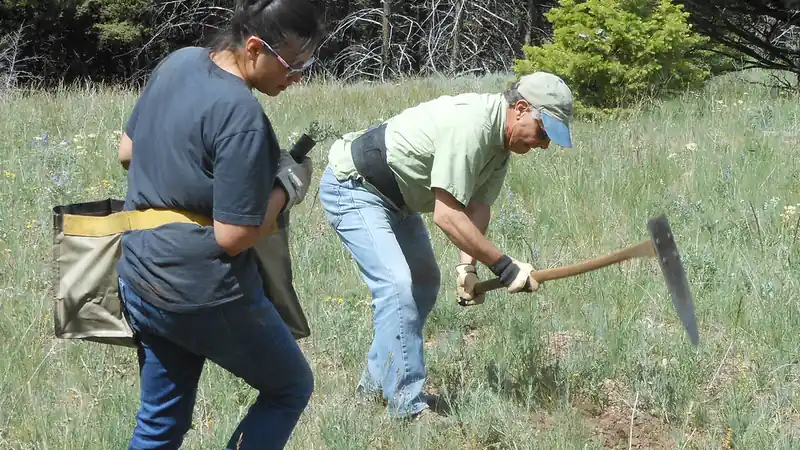
Photographs, both CC BY via Openverse: planting by mypubliclands and mowing a lawn by nenad53.