
Home / Services / Pest control SEO
For pest control companies
Pest Control SEO Services Built on What You Are Allowed to Say
Pest control SEO services usually start with the same copy: safe for your family and pets, eco friendly, all natural. In Texas, the state's advertising rule for structural pest control prohibits describing pesticides or their application in those terms, online as much as in print. We build pest control sites that rank for every pest you treat, turn one off callouts into service plans, and say what you actually do, which persuades a careful customer better than the words you cannot use.
Free, and no call required. We flag every claim on your site a regulator would question.
A page per pest · Claims checked against the rules · Reported on plans sold
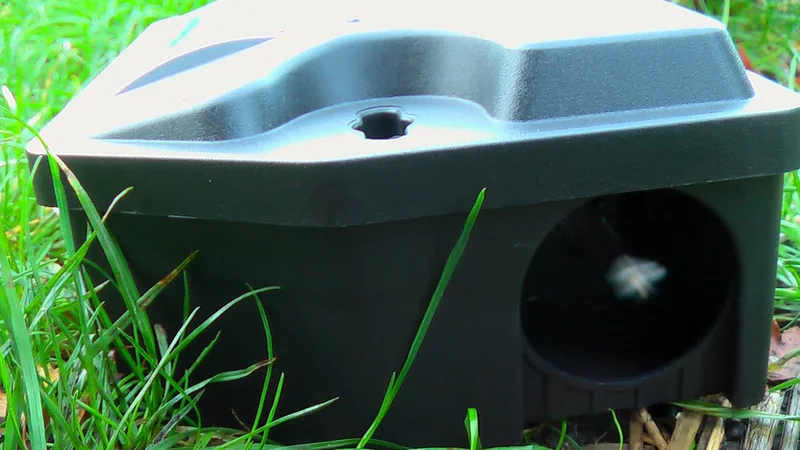
The copy most pest control sites share
The words that get pest control advertising into trouble
The Texas Department of Agriculture's rule on advertising by structural pest control businesses, 4 Texas Administrative Code 7.152, lists eleven kinds of false, misleading or deceptive advertising. Several of them describe, almost word for word, the copy on a typical pest control home page.
What the rule covers
The rule prohibits describing a pesticide or its ingredients as safe, using terms such as safe, harmless or non-toxic to humans and pets, whether or not the claim adds when used as directed. It prohibits claiming the products, the applications or their use are comparatively safe or free from risk, and describing them as environmentally friendly or similar, as containing all natural ingredients, or as organic. It prohibits suggesting a government agency endorses a product, naming EPA Registered and EPA Approved as examples, and making any claim you cannot substantiate at the time you make it.
Two other parts matter for SEO. The rule defines advertising to include digital and electronic communications to the public, so the website, the Google Business Profile and its posts are all in scope. And every advertisement must include the business name exactly as it appears on the business licence, which is also the name Google expects on the profile.
A licence before an advert
The same rule says nobody may advertise structural pest control services without a structural pest control licence. A marketing plan for a new branch in Texas starts with the licence, not the landing page.
The word green is not in it. The rule's own words are environmentally friendly or similar terms, which is broad enough that we avoid green as a description of the products or their application, and describe the method instead.
Outside Texas, check your own state's rule. The wording on this page is Texas's.
Where the wording came from
The list is older than the internet. The federal pesticide labelling rule, 40 CFR 156.10, treats a pesticide label as misbranded if it carries claims as to the safety of the pesticide, including safe, harmless and nontoxic to humans and pets, or comparative statements such as contains all natural ingredients. That rule governs the label on the product, not your website. Texas carried the same language into the rule for the companies that apply those products, and made it cover their advertising.
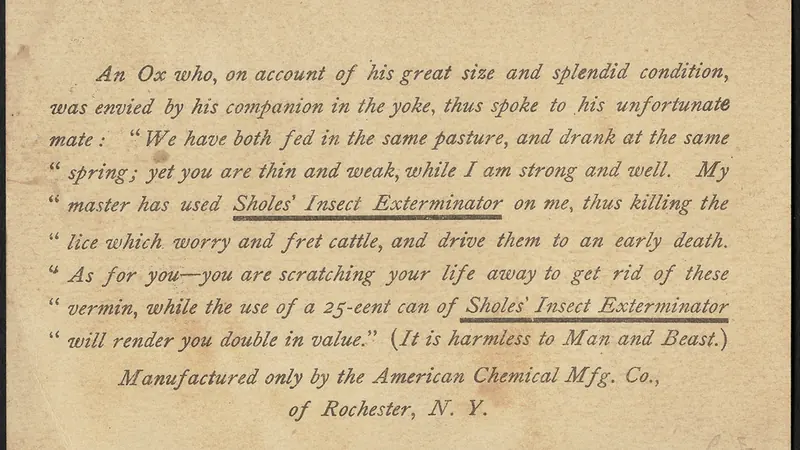
Claims like these were common long before any of it. The card beside this paragraph, an old advertisement for an insect exterminator, tells its readers the product is harmless to man and beast. The sentence has not changed much in a century; what has changed is that a regulator now reads your home page.
Why the honest version sells better
A parent with a toddler and a dog is not reassured by the word safe; every pest control site says it. What reassures them is detail: what is applied and where, how long to keep children and pets out of a treated room, why baits go in tamper resistant stations, that the technician follows the label. That is allowed, it is specific, and it is the copy their next question is looking for.
The business underneath the callout
A pest control company is built on service plans, not single visits
A wasp nest pays once. A quarterly service plan or a termite protection contract pays every year it is renewed. The SEO that grows a pest control company is the SEO that turns the first into the second.
The callout is how the plan starts
Most service plan customers did not search for a service plan. They searched for the thing in the kitchen: mice, ants, cockroaches, bed bugs. The company that answered quickly, explained clearly and sent a technician who did the same is the one offered the plan. So the pages that rank for individual pests are the top of the plan funnel, not a separate business.
That changes how the pest pages are written. Each one ends not only with a number to call, but with an honest explanation of when a one off treatment is enough and when a plan is the better value, so the conversation the technician has at the door has already started.
Measure the plans, not the calls
The report that matters is how many plans were sold from search, and how many of those renewed. A pest control company that ranks well and sells no plans has a front desk problem, a pricing problem or a technician problem, and the report should make clear which.
Recurring pests such as ants, cockroaches and rodents convert to general plans. Termites convert to protection contracts, often after an inspection. Bed bugs rarely convert at all, and the page should not pretend otherwise.
Commercial accounts are a different search
A restaurant owner, a property manager with three hundred units or a warehouse operator is not searching in a panic. They are looking for a contractor who will keep them out of trouble: one who turns up on the agreed day, leaves a service report every time, and can show an inspector or an auditor what has been done. Food businesses facing health inspections or third party audits need those records more than they need a low price.
The page for them reads nothing like the homeowner pages. It explains the documentation you provide, how often you visit, how quickly you respond between visits, the kinds of premises you already look after, and who their account manager will be. It is written for somebody who will sign a contract worth more than fifty household plans, and it is usually missing entirely.
Where commercial leads come from
Commercial buyers search for the service with the type of premises attached, restaurant pest control or apartment pest control, and they compare three providers before deciding. A page per type of premises, each with the records you keep and the visit pattern you follow, gives Google something to rank for each search and the buyer something to forward to whoever signs.
The advertising rules apply to commercial copy too. Telling a restaurant owner a treatment is safe around food is the same claim as telling a parent it is safe around children.
What a customer sees
Three places a homeowner finds a pest control company
Search exterminator near me, or the name of a pest and your town, and the results split into three parts, each won differently.
The screened block at the top
Paid per lead and gated on Google's screening. Not SEO and not sold as such, but the licence and insurance records behind it ought to agree with your website and profile, business name included.
Three companies on Google Maps
Ordered on relevance, distance and prominence. Pest control is a service area business, so the profile's service area, primary category, reviews and photos decide where you appear, and how far a route can stretch before it stops helping.
A page for each pest
Underneath the map, the search results are ordinary web pages: termite inspection, rodent control, bed bug treatment, mosquito service. A site with one Services page has nothing to show here.
Questions before the call, and AI answers
Many pest searches are questions before they are purchases: are these termites or flying ants, do I need an exterminator for one mouse, how long after treatment can the dog go back outside. AI Overviews increasingly answer those above the organic results, drawing on pages that answer them plainly. A pest page that opens with a clear, honest answer is the one quoted, and the one the reader trusts when they decide to call.
Those answers have to follow the same advertising rules as the rest of the site. How long to stay off a treated area is a question for the label and the technician, and the page should say so rather than promise anything is safe.
Search termite inspection plus your town, then bed bug treatment plus your town. If neither search shows your site, competitors are taking the highest value work in your area.
The page behind the best contracts
Inside a termite page that books inspections
Termite work is where pest control contracts are largest and longest. It is also where most sites say least. Here is how we lay it out; rodent and bed bug pages follow the same pattern.
Is it termites? Answered first
The page opens with what the customer actually saw: wings on a windowsill, mud tubes on a foundation wall, wood that sounds hollow. It explains what each sign usually means, and that the only way to be sure is an inspection. That is the honest answer, and it is also the one that books the visit.
What a termite inspection involves
How long it takes, what the technician looks at, whether you need to be home, what it costs or whether it is free, and what the customer receives afterwards. For homes being bought or sold, whether you provide the wood destroying insect report a lender or buyer asks for, and how quickly.
The treatment options, plainly
Liquid treatments and bait systems, what each involves for that kind of house, how long the work takes, and what happens next. Described as methods, never as safe or environmentally friendly; the page explains what is done and leaves the customer to judge.
The warranty and the renewal
What the warranty covers, for how long, what the annual renewal costs and includes, and what happens if termites return. This is the part a careful customer reads twice, and the part most sites leave to the sales visit.
Each section answers something people search for. Put side by side, those answers rank for termite inspection near your routes, give AI answers something to quote, and turn a worried reader into a booked inspection.
A line on a Services page saying termite treatment available does none of that.
Bed bugs need a page of their own, and a quieter one
Bed bug customers search late at night, often embarrassed, and many do not want a branded van parked outside. The page that wins them says so: whether you arrive in an unmarked vehicle, how to prepare the home, the difference between heat and chemical treatment and when each is used, how many visits it usually takes, and what the follow up inspection involves.
It is also the pest where honesty about plans matters most. A bed bug customer wants the problem gone, not a contract, and the page that says so plainly is trusted. Hotels, landlords and property managers are the exception, and they get their own commercial page.
If you offer discreet service, say it in the first lines of the page and on the profile. It is often the deciding detail, and almost nobody states it.
What we do
What pest control SEO services should cover each month
Ten things, in the order they change results for a pest control company. The first two protect you; the rest grow the plans.
Claims audited against your state's rule
Every page, the profile, its posts and your ads read for safety, environmental and endorsement claims, with a rewrite for each one that says what you do instead. In Texas, against 4 TAC 7.152; elsewhere, against your own state's rule.
The fastest way to remove a risk most companies do not know they are carrying.
The profile, built for a route
The business name exactly as on your licence, pest control service as the primary category where that is what you are, a service area that matches your real routes, honest hours, and photographs of your team, vans and work.
A page for every pest you treat
Termites, rodents, bed bugs, ants, cockroaches, mosquitoes, wasps, wildlife if you handle it. Each one with how to recognise it, when to call, what treatment involves and what it costs, written within the rules.
Our keyword research shows what customers on your routes call each pest, which is often not the textbook name.
Service plan pages that explain the value
What a quarterly plan includes, what it costs, what happens between visits, how cancellation works, and who it is worth it for. A plan explained honestly sells better at the door than one that is only mentioned there.
Reviews that mention the technician
A request after the first visit and after each renewal, and review replies that thank the customer and name the technician where appropriate. Customers choosing a company for their home are choosing the person who will come into it.
Seasonal content, published early
Termite swarm pages before the swarms, mosquito pages before the summer, rodent pages before the weather turns. Seasonal pages need time to rank, so they go live months ahead of the demand.
Town pages for your routes
For the towns worth the effort, pages built from route facts: which pests you treat most there, how old the houses are, how often a technician passes through. Never one page copied with the town name swapped.
Citations under the licensed name
Name, address and phone the same everywhere, under the business name on your licence, across directories, home service platforms and data aggregators. Old trading names and old numbers found and corrected.
Technical SEO and structured data
A site that loads fast on a phone, a number tappable from every page, structured data describing the business and its service area, and pest pages linked from a clear hierarchy so every one of them can be found.
Reporting on plans sold
Calls, forms and inspections booked by source, one off jobs and plans separated, the conversion rate of each pest page, and renewals where you share them. We show rankings, but plans sold is the figure we are judged on.
Work you can check
Results you can verify
Ask anyone pitching you which tool produced their numbers and what dates they cover. Every one of our published case studies names both.
Pages for the towns a service business covers
Pages built per place from real data, the method behind route pages that are not copies.
Pages per town, generated from factsAn independent holding the map against a national
A smaller business kept its place in local results while a national competitor outspent it many times over.
An independent beating a national's budgetA business the answers now cite by name
Facts made consistent across the web and pages rewritten as plain answers, which is what a pest page has to be.
How AI answers came to cite a clientThe market you are in
16,080 pest control businesses, and over a third in three states
The Census Bureau counts exterminating and pest control businesses by state. The distribution is far more concentrated than most trades.
What the numbers say about competition
Florida has 2,253 pest control businesses, more than any other state and more than New York, Georgia and Arizona combined. In the three largest states, the map pack in a typical suburb is crowded, and the companies that win are the ones with the strongest reviews and the clearest pages, not the biggest fleets.
The size of the firms differs too. Georgia's 705 businesses employ 8,767 people, about twelve each, while New York's 778 employ 4,608, about six. In a market of larger operators, a smaller company wins on specificity: the pests on its routes, the towns it knows, and the technician the customer will actually meet. Our work across the state is described on our page about how our Florida local SEO work runs.
Where it is not crowded
Outside the top ten, pest control businesses are spread thinly. In those markets a company with a page per pest and a complete profile can lead the local results with far less effort, and the opportunity is in being thorough rather than loud.
16,080 pest control businesses employing 139,917 people. Florida 2,253, California 1,933, Texas 1,476, New York 778.
County Business Patterns 2022.
Links a pest control company can actually earn
Link building for a pest control company happens one relationship at a time, and anyone offering links by the hundred is selling links that were paid for. The links that last come from relationships you already have: estate agents and home inspectors who send you termite inspection work, property managers you serve, the manufacturers whose bait and treatment systems you are certified to install, the local trade association, and community groups you sponsor.
Local press is the other source, and pest control has more news value than most trades. A termite swarm season, a mosquito warning, a rodent problem in a town centre: a short, accurate comment from a licensed technician is exactly what a local reporter needs, and it earns a link and a mention that a directory never will.
Where links sit in the plan
Links come after the basics. On-page SEO, a page per pest that answers real questions, and a complete profile produce more organic traffic and more leads in the first months than any amount of outreach. A sound SEO strategy for a pest control company is pages first, profile second, links third, and any pest control SEO company that proposes the reverse has the order wrong.
If you are certified to install a manufacturer's termite or rodent system, check whether its installer locator lists you, with your site linked. It is often the strongest link a small company can get.
Timing
Pest control is seasonal, and the pages have to be early
Demand for most pest work rises and falls through the year. A page published when the calls start is published too late to rank for them.
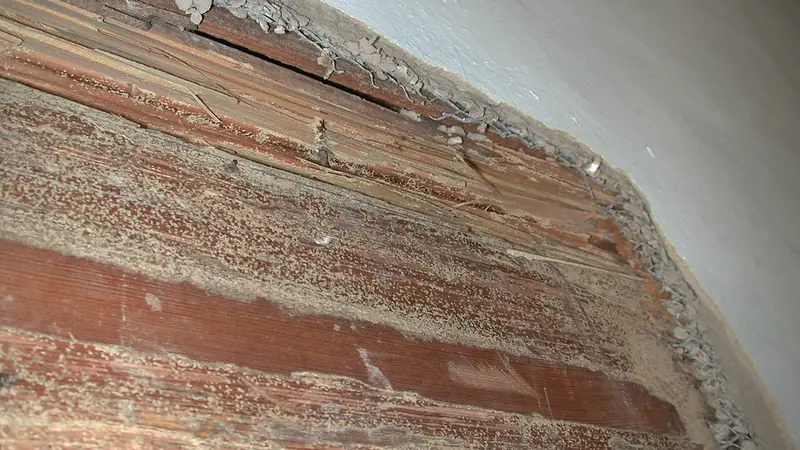
The year, pest by pest
In much of the country, subterranean termites swarm in spring, and that is when the termite searches come. Mosquito and stinging insect work builds through the summer. Rodents look for shelter indoors as the weather cools, so rodent calls rise in autumn and winter. Bed bugs and cockroaches are steadier. Your own call history is the best calendar, and we build the content plan from it.
Seasonal pages need months to rank. The termite page has to be live and earning links over the winter, the mosquito page in spring, the rodent page in summer. Publishing each one as its season starts means competing for it next year.
The quiet months
The slow season is when the work that lasts gets done: pest pages rewritten, town pages built, citations cleaned up, and the service plan pages improved so that the busy season's callouts convert into renewals. A content strategy for pest control is mostly a calendar.
Mosquitoes, lawns and the overlap
Many pest control companies sell mosquito and lawn programmes, and many lawn companies add mosquito service. The searches overlap and so does the competition. The lawn side has its own seasons and rules, covered for lawn care firms that add mosquito work.
Export twelve months of calls by pest from your scheduling software. The peaks tell us when each page has to be ready, and the gaps tell us which pests you are not being found for.

Why companies choose Moha as their pest control SEO agency
Most agencies write pest control copy from a template full of the words a regulator would question. We read the rule first. Then we build a page for every pest you treat, a profile under your licensed name, plan pages that explain the value, and content published ahead of each season. We report on plans sold and renewed, not rankings alone. When you speak to a pest control SEO expert, ours included, ask what the Texas rule says about the word safe. How quickly they answer tells you a lot.
Rules read first
Every claim checked against your state.
A page per pest
Signs, treatment, price and warranty.
Plans, not callouts
Pages and reports built around renewals.
Early by season
Content live months before the demand.
Licensed name
Profile and citations under the name on your licence.
You own everything
Site, profile, listings and data stay yours.
How it works
Our pest control SEO process
Remove the risk first, then build the pages that sell plans, in the order the seasons need them.
Audit
Every claim on the site and profile checked against your state's rule, the profile and its name, citations, which pests have a page, and your call history by season. Yours to keep either way.
Claims and profile
Risky claims rewritten, the profile completed under the licensed name, review requests running, call tracking live.
Pest and plan pages
The next season's pests first, then termites, then the plan pages, each built to the anatomy above.
Routes and seasons
Town pages for your routes, seasonal pages published early, local links, and reporting on plans sold.
Pest control SEO pricing
What this costs with Moha
One flat monthly figure, quoted after the free audit. No fee per lead and no share of your contracts. What moves the number is how many pests and towns are in scope, and how crowded your market is.
For a pest control company in one market.
- Claims audit and rewrites
- Profile under the licensed name
- Pages for your main pests
- Reporting on plans sold
- Dedicated strategist
For companies with several routes and seasonal programmes.
- Everything in Launch
- Seasonal content calendar
- Work prioritised ahead of other accounts
- Town pages for your routes
- Dedicated strategist
For pest control groups with several branches.
- A profile per real branch
- Claims kept consistent
- Reporting by branch
- Dedicated strategist and named team
Would the extra plans pay for this?
At these numbers, SEO returns 3.2 dollars of revenue for every dollar spent.
How Search works, from Google itself
Google's own introduction to how Search works: how it finds pages, how it understands them, and how it decides what to show.
A useful baseline for reading any agency's pitch, ours among them. It makes plain why a page per pest, answering the questions people actually ask, outranks a single page of services with a phone number on it.
Questions
Pest control SEO questions owners ask
Taken from what pest control owners ask in trade forums and Google's Business Profile help community, plus the phrasings people type into a search box.
Can we say our treatments are safe for children and pets?
In Texas, no. The structural pest control advertising rule prohibits describing pesticides or their application as safe, harmless or non-toxic to humans and pets, even with when used as directed. Describe what you do to keep exposure down instead. Check your own state's rule elsewhere.
Can we call ourselves eco friendly or green?
Texas prohibits describing the products or their application as environmentally friendly or similar, all natural or organic. Green is not named, but it is close enough that we avoid it. Describing your method, inspection first and targeted treatment, is allowed and more persuasive.
Can we use integrated pest management in our copy?
Describing your method as integrated pest management, and explaining what that means in your visits, is a description of practice. What the Texas rule targets is claiming the products or their use are safe or environmentally friendly. Keep the copy on what you do.
How much do pest control SEO services cost?
Launch is $3,000 a month and Growth $4,800, with multi branch groups quoted individually. Use the calculator with your own first year customer value.
What are the best SEO keywords for pest control companies?
The name of each pest plus your town, then the questions behind them: is it termites, how to get rid of mice, bed bug treatment cost. Customers search by pest, not by service category, which is why a page per pest outranks a page of services.
What category should our Google profile use?
Pest control service is the usual primary category. Add others, such as termite control, only for work you genuinely do, and keep the business name exactly as on your licence.
Do we need a page for every town on our routes?
Only for the towns that earn it, and only with route facts no other page has. Duplicates that differ by a town name tend to hurt rather than help.
Should we publish prices?
Yes, as ranges, for inspections, one off treatments and plans. Customers comparing companies call the one that tells them what to expect.
How do we turn one off jobs into service plans?
Explain the plan honestly on every pest page, so the customer has read about it before the technician mentions it, and follow up after the first visit. Then measure plans sold from search, not just calls.
When should seasonal pages go live?
Months before the season. A termite page needs to be live over winter to rank in the spring swarm season; a rodent page in summer for the autumn calls.
Do we need a pest control SEO specialist, or will a general agency do?
What matters is whether they know the advertising rules, understand service plans, and plan content to the seasons. Ask any agency, specialist or not, those three questions.
How do we get more reviews?
Send a text with a direct link after the first visit and again at renewal. Rewards for reviews are off limits. Answer each review with a detail from that visit.
How long until results show?
Profile and claims fixes can show within weeks. Expect pest pages to need a few months before they settle in the results, which is why seasonal ones are written a season early.
Is a seo company for pest control near me better?
Not necessarily. SEO is done remotely. What matters is whether the agency reads your state's rule and understands your routes, not where its office is.
Do you guarantee the top three on the map?
We cannot, and nobody honestly can: Google says local ranking cannot be bought, and the searcher's distance from you weighs heavily. What we guarantee is the work and a truthful report on plans sold.
What do you need from us?
Access to the site and profile, your licence details, twelve months of calls by pest if you have them, your price ranges, and photographs of your team and work.
Free audit
Work with an SEO company for pest control that reads the rules first
Send your website and we will send back every claim a regulator would question, which pests have no page, how your profile reads under your licensed name, and the changes we would make first. No pitch deck and no long call before you can judge it. The map side is local SEO for a route based business, done the same careful way.
No call required.
Photographs and image, all CC BY via Openverse: Bait station by Patent Buff, More Termite Damage by Editor B, and a trade card for Sholes' Insect Exterminator from Boston Public Library.