
Roofing SEO company
A Roofing SEO Company for the Week After the Storm
Moha is a roofing SEO company for roofers who want the work a storm creates without the shortcuts that come with it. Roofing demand does not arrive evenly. A hail or wind event puts a year's worth of searches into a few weeks in the towns it crossed, and out of area contractors arrive with it. The roofer who is already visible, already reviewed and already trusted in those towns gets the calls. The one who advertises paying the customer's deductible to catch up may be committing an offence. We build the first kind.
Free, and no call required. We check what you rank for in the towns your last storm crossed.
Ready before the storm · Advertising that stays legal · Reported on booked jobs
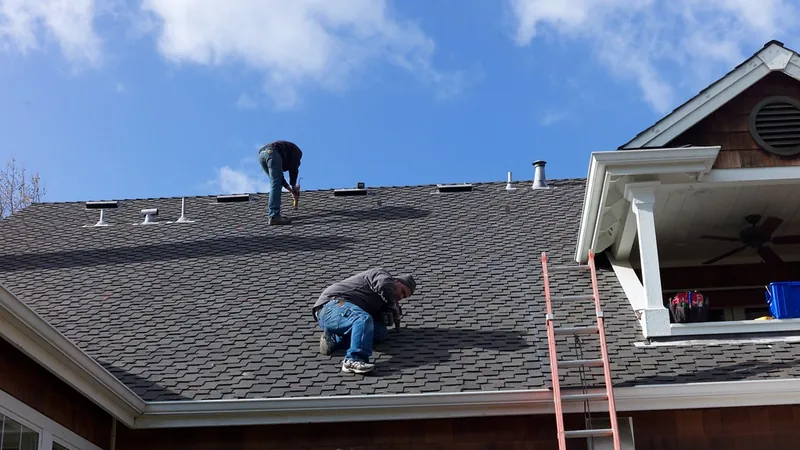
The thing that makes roofing different
Storm demand arrives all at once, and so do the promises that break the law
Most trades see demand rise and fall over a season. Roofing sees it land in a single week in a handful of towns, after a storm nobody scheduled. That compresses the whole of roofing SEO into a question of what is already in place before the weather turns, and it puts enormous pressure on the advertising in the days after.
The storm week, from the homeowner's side
A homeowner whose street was hit looks up at the roof, sees nothing obvious, and searches. Roof inspection near me, hail damage roof, roofer in their town. They are also being knocked on by contractors they have never heard of, some from out of state, and handed flyers. What they want from a search is somebody local, visible, reviewed and plainly legitimate.
That is decided before the storm, not after. The roofer whose Business Profile has years of reviews in that town, whose site has a page about storm damage written for that area, and whose licence and insurance details are easy to find is the one who gets called. Nothing built in the storm week catches up with that.
The promise that wins the week, and why it is illegal in Texas
The fastest way to win a storm job is to tell the homeowner they will not have to pay the deductible. In Texas the law is direct. Insurance Code 707.002 says that a person insured under a property insurance policy shall pay any deductible on a first party claim. And Business and Commerce Code 27.02 makes it a Class B misdemeanor for a seller to advertise or promise that they will pay, waive, absorb or decline to collect the deductible, offer a rebate or credit that offsets it, or otherwise help the insured avoid it, without the insurer's consent.
The word that matters for SEO is advertise. The offence is not only doing it. A landing page, a Google ad, a door hanger or a Business Profile post that promises it is enough.
Texas also requires a notice in at least twelve point bold type on any contract of $1,000 or more that is expected to be paid from an insurance claim, beginning with the words that Texas law requires the insured to pay any deductible.
If you work in another state, check whether it has a similar rule before your next storm, not during it.
What wins the week instead
The legal offers are the ones homeowners actually need. A genuinely free inspection with no obligation. A written report with photographs of what was found. Financing you actually offer, with the terms stated. Warranty terms described accurately, workmanship and manufacturer separately. Each of these can be the headline of a storm landing page and none of them puts the business at risk.
What converts best, in our experience, is evidence of being local and established: reviews from the same streets, photographs of roofs you finished in that town, and a phone answered by somebody who knows where the town is. A storm chaser cannot fake any of those, which is exactly why they are worth building in the quiet months.
The out of area contractor problem
Contractors who follow storms sometimes set up a temporary address to rank in the affected area. Google's guidelines say a service area business cannot list a virtual office unless it is staffed during business hours. A local roofer who knows this can report a fake listing, and one who is tempted to do the same in a neighbouring market should know it is a suspension waiting to happen.
You will lose some storm jobs to a contractor promising to cover the deductible. In Texas they are taking a criminal risk to win them. The jobs you win with evidence and reviews do not come with that risk, and the reviews they produce win the next storm too.
Where a homeowner looks
Three places a roofing job is won before the ladder goes up
Search a roofing service plus a town and three distinct things fill the screen. Knowing which you can win and how is most of a sensible plan.
The screened block at the top
It sells leads rather than clicks, is gated on licence and insurance checks, and sits above the map. It is not SEO, but in a storm week it fills fast, and the roofers who have it set up before the weather turns are the ones who benefit. The screening uses the same records we put on your site.
Three roofers on Google Maps
Ordered on relevance, distance and prominence. For a roofer, whether the search is a roof repair or a full replacement, the reviews carry unusual weight, because a homeowner is about to let a stranger onto their house and write a large cheque. Reviews with photographs of finished roofs in the searcher's own town do more than any amount of copy.
Storm damage and replacement pages
The pages that answer what homeowners search before they call: how to tell if hail damaged my roof, how much a roof replacement costs, how long a roof lasts, what the insurance process looks like. These are the searches that never stop, storm or no storm, and the organic traffic they bring compounds year after year because the pages keep their place in the search results between storms.
Repair calls and replacement projects are different searches
Good SEO for roofers splits along this line. A leak in the night is a repair search, a local SEO problem, local and urgent, decided on the map. A full roof replacement is a project worth many thousands, researched over weeks, compared across several quotes, and often influenced by an insurance adjuster's report. A roofer who treats them as one search builds one kind of page and wins one kind of job.
We build for both: the profile and fast repair pages for the urgent search, and detailed replacement pages, material comparisons and cost explanations for the project. The second kind is where most of a roofing company's revenue sits and where most roofing sites are thinnest.
Search roof replacement cost plus your town. Count how many results are local roofers rather than national cost guides. If the answer is none, that is the page you should write first.
What we do
What roofing SEO services should cover each month
Ten things, in the order they change results for a roofing company. Most SEO services for roofing contractors, and most SEO marketing companies for roofing companies, do the first three and report rankings. The rest is where the replacement work comes from.
A storm ready Google Business Profile
The primary category set to the work you want more of, repair and replacement services listed fully, accurate hours, a booking or quote link that works, and real photographs of your crews and finished roofs. It sounds basic. In a storm week it is the difference between being chosen and being scrolled past.
The name is the name on your trucks. Adding storm damage or hail repair to it is a common edit and a common suspension.
Service areas set for replacements
Roofers travel further for a replacement than a plumber does for a leak, so the service area reflects where you genuinely take projects, within Google's guidance of about two hours from your base. The towns that matter most get local pages, especially the ones your past storms crossed.
We do not paint a service area over a whole state because a storm might hit it. That reads as inaccurate to Google and to a homeowner ringing from the far edge.
Reviews with photographs of the roof
Prominence is a third of local ranking and review count is one of its named inputs. For roofing, the review that carries a photograph of the finished roof and names the town is worth several that only say great job. We set up a request at the point of completion, when the homeowner is looking at a new roof.
We write the review replies, naming the work and the area, and never anything personal the customer did not say first.
Licence, registration and insurance shown
Where your state or city licenses or registers roofing contractors, the number goes on the site and in the profile description, in the name the licence is held under. Proof of insurance goes where homeowners look for it. After a storm, these are the first things a careful homeowner checks and the things a chaser is least able to show.
Citations across the directories that matter are reconciled to the same name, address and phone.
Roof replacement pages that answer the cost question
The pages where revenue lives. What a replacement involves, how long it takes, what drives the cost, the materials you install and how they compare, how long each lasts, and what happens to the old roof. Written for a homeowner comparing quotes, with real photographs of your own work.
The keyword research behind them follows the words homeowners use, which are rarely the trade terms, and the on-page SEO makes each page answer its question in the opening lines. You do not have to publish a price list: explaining what moves the price converts better than refusing to discuss it.
Storm damage pages, written before the storm
How to spot hail and wind damage, what to do in the first days, how an inspection works, what the insurance claim process generally looks like from the homeowner's side. Built for your area in the quiet months, so they are indexed and ranking when the weather arrives.
Nothing on them promises to cover a deductible, and nothing presents you as handling the claim for the homeowner. They explain, and they make the free inspection easy to book.
Technical SEO for photograph heavy pages
Roofing sites are full of large project photographs, read on a phone on a driveway. Core Web Vitals suffer, pages load slowly and homeowners leave. We compress and size images properly, fix the slowest templates, and make the quote form work on a small screen.
Schema that matches what each page says, and a sitemap that reflects the real structure, go in at the same time.
Link building from the trade around you
Backlinks from the suppliers you buy from, the manufacturer certification programmes you belong to, the trade associations, local press when a project is worth covering, and the community organisations you support. They feed prominence and they cannot be copied by somebody who arrived last week.
We do not buy links or use networks. A roofer's reputation is local and slow to build, and it is not worth risking.
AI Overviews and assistant answers
Homeowners now ask assistants whether a roof can be repaired or needs replacing, and read AI Overviews before clicking. What gets quoted is a business whose details agree everywhere and whose pages answer plainly. Careful explanatory pages are good candidates; pages that are mostly a sales pitch are not.
This sits inside the retainer, and nothing about it involves submitting your site anywhere.
Reporting by job type and by storm
We report calls, quote requests and booked jobs, split into repairs and replacements and by town, with each line's conversion rate. After a storm, we report what came from the affected towns separately, so you can see what the preparation in the quiet months was worth.
A ranking chart tells you none of that, and a roofing business is run on jobs, not positions.
The work that wins the storm week
What a roofer should build in the quiet months
Everything above comes down to preparation, so here is what preparation actually means. This is the order we work in between storm seasons, and why each piece has to be in place before the weather turns rather than after.
First, the towns your last storms crossed
This is the whole content strategy in miniature. Storms do not repeat exactly, but the towns that were hit last time are the towns where homeowners already know the risk and where your finished roofs are already visible from the street. We list them from your own job history, and they get local pages, photographs of the roofs you did there, and the review requests that ask customers to mention where they live.
Then the storm damage pages, indexed in advance
A page written the day after hail will not rank that week. Google has to find it, crawl it and decide where it belongs, and in a competitive metro that takes time. Storm damage pages written in the quiet months are already ranking when the searches arrive. They explain how to spot damage from the ground, what to do before anybody climbs up, and how to book an inspection, in plain language and with no promises about the deductible.
Then the replacement pages
The pages that answer cost, materials and timing are useful all year, which is why they compound. After a storm they become the pages a homeowner reads once the adjuster has confirmed the roof needs replacing and they are choosing who to trust with a large job.
Finally, the paperwork that the week will test
Licence and insurance details current on the site and the profile. Local Services Ads set up and screened if you use them. In Texas, the claim funded contract carrying its twelve point bold deductible notice. Each is quick in February and impossible in a storm week.
A roofing SEO company that only reacts to storms is selling you the busiest week of the year at the highest price. The preparation is cheaper, it ranks better, and it is still working long after the storm crews have moved on to the next state.
Work you can check
Results you can verify
Ask anyone pitching you which tool their figures came from and which dates they cover. Every published case study of ours names both.
Ranking in towns the business had no page for
Pages built per place from real data, which is how a roofer prepares the towns its next storm will cross.
Town pages built from dataA local operator holding results a national wanted
The profile rebuilt, content aimed at the questions buyers actually type, reach pushed out one area at a time.
Beating a national on the mapGetting a client quoted inside Google's AI answers
Business details reconciled everywhere, crawl faults cleared, pages rewritten to answer rather than sell.
A business the assistants now citeThe market you are in
24,532 roofing contractors, and the second most of them in Texas
The Census Bureau counts roofing contractor establishments by state. The three largest states hold almost three in ten of them, and the second largest is the one where the deductible advertising rule above applies.
What the numbers mean for a roofing company
California, Texas and Florida together hold 7,169 of the country's 24,532 roofing contractors, 29.2% of them. Those are crowded markets where a roofer competes with hundreds of others in the same metro, and where the profile, the reviews and the replacement pages decide who gets called. A crowded market rewards the business that is visibly established, and punishes the one that looks like it arrived last month.
The figure also shows how many roofers operate outside the big three. In Illinois, Washington, Colorado, Ohio, Pennsylvania, New York and North Carolina, each with between 784 and 1,012 roofing contractors, a roofer who does the work properly can be the clear local choice in a set of towns in a way that is much harder in Houston or Los Angeles.
Texas, specifically
Texas has the second most roofing contractors and some of the most severe hail anywhere, which is why we cover it separately on our state page, where hail shapes the Texas year. It is also the state where the deductible rule makes the most common storm promise an offence. Roofers there need SEO that wins the storm week legally, because the competition is heavy and some of it is not playing by the rules.
24,532 roofing contractor establishments employing 204,998 people nationally. California 2,795, Texas 2,347, Florida 2,027.
County Business Patterns 2022, the most recent national release by industry.
Only in roofing
What a roofing website may promise, and what it may not
Roofing advertising runs into rules that most trades never meet, because so much of the work is paid for by insurance. None of this is legal advice, and your state will differ, but these are the rules we write to.
The deductible, in Texas and elsewhere
Texas Business and Commerce Code 27.02 is the clearest example. Advertising or promising to pay, waive, absorb or not collect a deductible, or a rebate or credit that offsets it, without the insurer's consent, is a Class B misdemeanor. It covers the promise as well as the act, which brings every landing page, ad and post into scope.
Phrasings we remove on sight: we cover your deductible, no out of pocket cost, we will work with your deductible, free roof with your insurance claim. Each implies the homeowner will not pay what the policy says they must.
The free inspection has to be free
Free roof inspections are legitimate and they work. They have to be genuinely free and genuinely without obligation. An inspection that turns into a high pressure contract signing on the driveway produces exactly the reviews that undo years of work.
Claims about damage
Pages that tell every homeowner after a storm that their roof is almost certainly damaged invite complaints and they do not convert better. Pages that explain how to look for damage, what an inspection finds and what it does not, are more useful and more credible.
Names, addresses and service areas
Google does not permit unnecessary information in the business name, does not allow a service area business to list an unstaffed virtual office, and asks that the overall service area stay within about two hours of the base. Each is a suspension risk in a trade where competitors are paying close attention.
The audit reads every page, ad and post for deductible language and flags it. Storm pages are written in advance to a standard that never promises it.
If you work in Texas, we check your claim funded contract template for the twelve point bold notice as well, because it is part of the same rule.

Why roofers choose Moha as their roofing SEO agency
Most roofing SEO advertising companies sell roofers the same package they sell everyone and report rankings. They do nothing before the storm and panic after it, often with exactly the deductible language that puts a Texas roofer at risk. We build the storm week in the quiet months: profile, reviews, storm pages and replacement pages in the towns that matter, so that when the weather comes you are the established local choice. And we keep the advertising inside the law, because a roofing company's reputation takes years to build and one bad week to lose.
Built before the storm
Storm and replacement pages ranking months ahead, not written in a panic.
Deductible language removed
Every page, ad and post read for it, and nothing new published with it.
Replacements, not just repairs
The pages where the revenue is, which most roofing sites barely have.
Reported by storm
What came from the towns a storm crossed, so you can see what preparation paid.
No bought links
Your reputation is local and slow. It is not worth risking for a ranking.
You keep everything
The profile, the pages and the photographs stay yours, including the day you leave.
How it works
Our roofing SEO process
Clean up the risk first, then the profile, then the pages that earn replacements, then the wider area.
Audit and advertising review
The profile, the reviews, every page and ad read for deductible language, licence and insurance details checked, and what ranks for repair and replacement searches in your main towns. Yours to keep either way.
Profile and reputation
Profile corrected and completed, service area set honestly, review requests running at completion, citations reconciled, risky language removed everywhere.
Replacement and storm pages
Replacement pages that answer the cost question, storm damage pages for your area written in advance, and the technical work that makes them fast on a phone.
The wider area and authority
Pages for the towns your past storms crossed, supplier and certification links, and reporting by job type, town and storm.
Roofing SEO pricing
What roofing SEO costs with Moha
One flat monthly figure, quoted after the free audit. No per lead fee, no commission on a roof, and you are not buying a lead three other roofers were also sold. What moves the number is how many towns and services are in scope.
For one market done properly before the next storm.
- Profile and reviews
- Advertising review
- Core replacement pages
- Reporting by job type
- Dedicated strategist
For several towns and storm pages built ahead of the season.
- Everything in Launch
- Storm pages for each market
- Work prioritised ahead of other accounts
- Reporting by town and storm
- Dedicated strategist
For roofers with several branches or a commercial division.
- A profile per genuine branch
- Commercial and residential split
- Reporting by branch
- Dedicated strategist and named team
Would one replacement a month pay for this?
At these numbers, SEO returns six dollars of revenue for every dollar spent.
Replying to reviews, from Google itself
For a roofer, the review reply is where a homeowner judges how you handle the job going wrong. Google's own short guide covers reading and replying from the profile.
A good reply to a positive review names the work and the town. A good reply to a complaint says what you did about it and invites contact, without arguing in public. The next homeowner on that street will read both before choosing who climbs on their roof.
Questions
Roofing SEO questions owners ask
Taken from what roofers ask in trade groups and Google's Business Profile help community, plus the phrasings people type into a search box.
How much does roofing SEO cost?
Launch is $3,000 a month and Growth $4,800, with multi branch roofers quoted individually. For a roofer the arithmetic is simple: one extra replacement a month usually covers it. Run the calculator with your own close rate and job value.
Can I advertise that we cover the homeowner's deductible?
Not in Texas. Business and Commerce Code 27.02 makes it a Class B misdemeanor to advertise or promise to pay, waive, absorb or not collect a deductible, or give a rebate or credit that offsets it, without the insurer's consent. Other states have their own rules, so check yours before you write the ad. This is not legal advice.
What should we advertise after a storm instead?
A genuinely free inspection, a written report with photographs, financing you actually offer, and accurate warranty terms. Above all, evidence that you are local and established: reviews and photographs from that town. Those are what homeowners trust when strangers are knocking on doors.
How do we rank in the towns a storm just hit?
Mostly by having done it before the storm. Pages for those towns, reviews from them and a profile that already covers them are what rank in the storm week. Building them after the weather is almost always too late for that storm, though it prepares you for the next one.
Should we have separate pages for repairs and replacements?
Yes. They are different searches from people in different situations. A repair is urgent and local; a replacement is a large project researched over weeks. Replacement pages that explain cost, materials and timing are where most roofing revenue comes from and where most roofing sites are thinnest.
Should we publish roof replacement prices?
You do not need a price list, but you should explain what drives the cost: size, pitch, material, layers to remove, access, local rules. Homeowners search for cost before they ask for quotes, and a page that explains it honestly converts better than one that refuses to discuss it.
Can we put hail damage or storm repair in our business name?
Only if that is genuinely your trading name on your trucks and paperwork. Google does not permit unnecessary information in the name and says it can lead to suspension, and in a competitive trade it gets reported.
A storm chaser has set up a listing at a fake address. What can we do?
Google's guidelines say a service area business cannot list a virtual office unless it is staffed during business hours. A listing at an unstaffed address can be reported through Google Maps. We can help assemble the evidence, but we will not report a competitor without a genuine breach.
How long until roofing SEO produces jobs?
Profile and review work often shows within six to eight weeks. Replacement and storm pages usually take three to six months to settle. That is why the right time to start is the quiet season, not the week after hail.
Do reviews really matter that much for roofers?
More than for most trades. A homeowner is letting a stranger onto their house and writing a large cheque. Review count feeds prominence, a third of local ranking, and reviews with photographs of finished roofs from the same town do more to win the call than anything you can write yourself.
Do you guarantee first place on Google Maps?
No. Google states there is no way to pay for a better local ranking. We commit to the work and to honest reporting on jobs, split by type and by town, whether the numbers are good or not.
What about Local Services Ads?
They are paid and screened, and in a storm week they fill fast. They are not SEO, but they sit next to it, and the licence and insurance records they check are the same ones we put on your site. Set up before the season, they are worth having.
Is this the same as home services SEO?
Roofing is one of the trades a home services firm may run, but a dedicated roofer has different problems: the storm, the insurance rules and the replacement project. Firms that roof alongside other trades have an architecture question first, which we cover for multi trade firms that also roof.
What do you need from us?
Access to the site and the Business Profile, your licence and insurance details, photographs of finished work, a list of the towns your past storms crossed, and your contract template if you work in Texas. We will ask the crews to photograph completed roofs; that is the habit that pays most.
How do we choose the best roofing SEO company for us?
Ask three questions of any SEO company for roofing contractors. What will you build before the next storm, and in which towns? What do you report, rankings or signed jobs? And would you ever advertise that we cover a deductible? An SEO agency for roofing that cannot answer the first, reports only rankings, or shrugs at the third is not offering an SEO strategy you want. The best roofing SEO for one company is the plan that fits its towns, its storms and its close rate, which is what the free audit sets out.
Is it worth it for a small roofing company?
Often more than for a large one. A small roofer who is visibly established in a handful of towns can be the clear local choice there, which is very hard for a big firm spread thin. One extra replacement a month usually pays for it.
Free audit
Work with a roofing SEO company that prepares you before the storm
Send your website and we will send back what you rank for in your main towns, any deductible language we would remove, the state of your profile and reviews, and the replacement pages we would build first. No pitch deck and no long call before you can judge it. The profile work is part of the map side of roofing, and if you want paid search during a hail week while the pages mature, we run that too.
No call required.
Photographs via Openverse, both CC BY: Starting Roof Install by joncallas and Ice dam weather by photofarmer.