
Home / Services / Local SEO / Ohio

Local SEO Ohio

Local SEO in Ohio: Columbus, Parma and the 170 Towns in Between

Moha runs local SEO in Ohio for service businesses, and this state works differently from every other one we cover. There is no dominant city. Six places hold 100,000 people or more, while 170 places of 10,000 to 100,000 hold nearly twice as many residents between them. Your customers are spread across towns, so the plan has to be built town by town rather than aimed at the state.

Thank you. We have your details and will send the audit back shortly.

Free, and no call required. We send back the towns we would target first and what they cost to win.

Dedicated strategist on every plan · Month to month after the ramp · Reporting on real outcomes

The Columbus skyline over the Scioto River, the strongest growing Ohio market where Moha provides local SEO
Columbus, one of two Ohio markets with a dedicated plan
170Ohio towns of 10,000 to 100,000 peopleCensus Bureau, Vintage 2024 place estimates
4.13MOhioans living in them, against 2.21M in the six big citiesCensus Bureau, Vintage 2024 place estimates
$214,800median home value, the lowest of any state we coverCensus ACS, 2020 to 2024
131kpeople separate Ohio's three largest metrosCensus Bureau, Vintage 2024 estimates

Where customers find you

Three places Ohio customers find a business, and how our SEO covers each

Somebody in Lakewood needs a furnace looked at in February. They search, they look at three businesses on a map, they glance at what is underneath, and increasingly they read an AI summary that has already chosen for them. The unusual thing about Ohio is how few businesses have done the work to be one of those three, which makes all three surfaces cheaper to win here than anywhere else on this site.

01 · Local

The Map Pack on Google Maps

Three businesses on a map, and the destination of most "near me" searches. Google ranks them on relevance, distance and prominence. Ohio's towns are small and tightly packed, so the Map Pack changes every few miles, which is exactly why the town level search terms exist in the first place.

02 · Organic

The organic search results

Below the map, search engine optimization in the classic sense decides it: keyword research, on-page SEO, technical SEO, content and backlinks. Organic traffic is where the Ohio opportunity sits, because a page built properly for one town of forty thousand people is a far shorter fight than a page aimed at the whole state.

03 · AI answers

AI Overviews and ChatGPT

AI Overviews and assistants such as ChatGPT settle a growing share of questions outright. Google states there are no special requirements to appear in AI Overviews: be indexed, be eligible for a snippet, be genuinely helpful. Where competitors are thin on the ground, being the only substantive answer is unusually easy.

What we do

Local SEO services in Ohio, and what each one actually does

Ten services, run by one team every month: local SEO and your Business Profile, keyword research, on-page SEO, technical SEO, content strategy, link building, citations, review management, AI search and reporting. You are buying the work and a monthly report of what it produced, not a login.

Take one on its own or run several together. In Ohio the mix tilts further toward content than it does elsewhere, because the winnable searches are spread across a hundred towns rather than concentrated in one expensive city term.

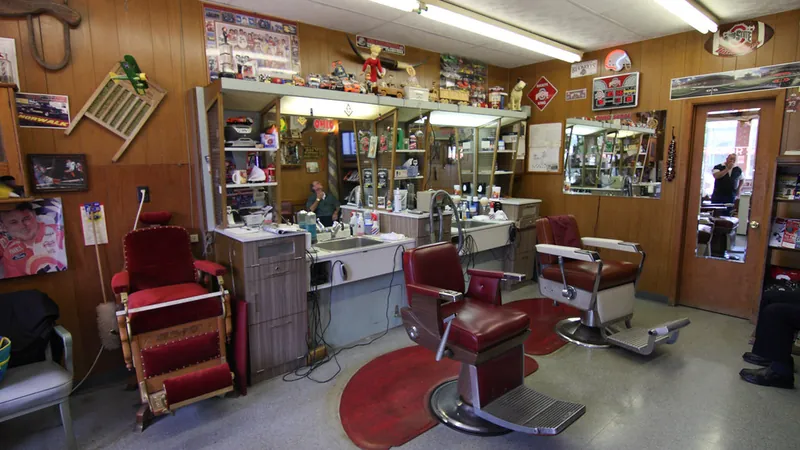
A local storefront, the kind of Ohio service business our local SEO company works with
01

Local SEO and Google Business Profile optimization

The profile is what shows in the Map Pack and on Google Maps, so it comes first. We choose categories that match the work you want most, complete every service and attribute, add photographs of real local jobs, publish posts and keep hours accurate through an Ohio winter.

The service area matters more here than in a big city market, because the towns are small and adjacent. A business in Parma that lists Parma Heights, Brook Park, Middleburg Heights and Garfield Heights is covering four separate search markets that sit inside twenty minutes of each other, and several of them have almost no competition at all.

Category and service mappingWeekly posts and photosTown level service areasMonthly profile audit
02

Keyword research for Ohio towns and services

This is the service that matters most in Ohio and the backbone of your SEO strategy here, and it is why this page reads differently from our other states. In Texas or California the research starts with a metro and works down. In Ohio it starts with a list of towns, because that is where your customers are: 170 places of 10,000 to 100,000 people holding more of the state than its six cities do.

So we build the map town by town. Every service you offer, crossed with every place you will genuinely drive to, ranked by how many people live there and how far they are from you, with one primary query per page. The result is many small pages, each actually about its town, rather than one expensive fight over a head term that nobody in Ohio types anyway.

Town by town mappingDifficulty weighted targetsOne primary keyword per pageQuery overlap checks
03

On-page SEO for service and location pages

On-page SEO makes a page unmistakably about one thing. We write titles, headings and meta descriptions from the keyword map, answer the question in the opening sentence, and mark each page up so search engines read it the way a person does.

Ohio is the state where location pages can genuinely pay, and also the state where they most often fail. Publishing forty town pages that differ only by name is the single fastest way to get all of them ignored. Each one needs the town's own neighbourhoods, its own nearby places, its own reviews and its own reason to exist. Done properly it is the best return on this site. Done as a template it is worse than nothing.

Titles, headings, metaTown pages built from real detailInternal linkingAnswer first structure
04

Technical SEO: speed, mobile, crawling and schema

Technical SEO covers what lets search engines crawl, understand and trust your site: Core Web Vitals, mobile layout, indexing, redirects, broken links, sitemaps and structured data. We measure on real devices rather than a desktop score.

A site with forty town pages has technical requirements a five page site does not. Crawl budget, internal linking depth, sitemap structure and canonical handling all start to matter, and getting them wrong is how a well written set of town pages ends up half indexed. That is ordinary engineering, and it is the part most agencies skip when they sell programmatic pages.

Core Web VitalsCrawl and index controlSchema per locationSitemaps and canonicals
05

Content strategy and content marketing

Search engines rank the page that answers the question best. In Ohio that means content built town by town and season by season: what a furnace replacement costs here, what the county inspection involves, what to do about ice dams, which permits a village requires.

Language is barely a factor. 8.0% of Ohioans speak a language other than English at home, the lowest of any state on this site and less than a third of the New York figure. That frees the content budget for depth and coverage instead, which is where the return is here.

Service and FAQ contentTown pagesSeasonal and permit questionsContent calendar
06

Link building and off-page SEO with Ohio sources

Backlinks remain one of the strongest authority signals, and the ones that count for a local business are local and specific: the county or village chamber, the trade association you belong to, supplier and manufacturer directories, the team you sponsor, and local press when there is news.

Ohio has an unusual advantage here. Small towns still have their own papers, chambers and civic organisations, and almost none of them are being approached by contractors for coverage. A handful of genuinely local links can move a town page a long way, because so few sites in that town link to anybody. We do not buy links or use networks that put your site at risk.

Village and county chambersTrade associationsSmall town pressRisky link review
07

Local citations and NAP consistency

Citations are listings of your business name, address and phone number across directories and data sources. When they disagree, both customers and search engines discount you. We audit and correct them against your Ohio Secretary of State registration so every listing tells one story.

For the five trades Ohio licenses at state level, electrical, HVAC, plumbing, hydronics and refrigeration, the licence number goes into every directory field that allows one. General contracting is licensed locally instead, so what you can claim depends on the municipality, and we keep those claims accurate per page rather than repeating one line everywhere.

Citation audit and cleanupCore directoriesLicence numbersDuplicate removal
08

Review management

In a small town the review profile is the reputation, because word of mouth and Google say the same thing to the same few thousand people. A business with fourteen recent reviews in a town where the competitor has three is not slightly ahead, it is the obvious choice.

We set requests to go out as each job closes, reply to every review in your voice, and flag the ones that need you. Reviews that name the town are worth a great deal here, because the town is the search. Review management also runs on its own; this is how the review engine works.

Requests on job closeReplies to every reviewTown specificsMonthly review report
09

AI search optimization for AI Overviews and ChatGPT

Ask an assistant for a plumber in Stow and it will name two or three without showing a results page. Moha is an AI powered digital marketing agency, so this sits inside the SEO work rather than beside it. There is no form to submit and no setting to switch on.

What an AI answer needs is a business whose facts agree everywhere, pages that answer in the opening line, local detail that exists nowhere else, and a reputation it can check. In thinly covered towns the bar is genuinely low, because there may be nothing substantive for an assistant to quote at all. One of our clinic clients is turning up inside AI answers.

Answer first structureEntity consistencyAI visibility checksLocal proof
10

SEO reporting you can act on

With a page set spread across many towns, the report has to show which towns are working rather than one state total. Ours splits calls, direction requests, form fills and booked jobs by location, so you can see which pages are earning and which should be cut.

That matters more in Ohio than anywhere else on this site, because the strategy is deliberately broad. A page that has produced nothing in four months is information, not a failure, and it gets replaced rather than defended. Rankings and traffic are the explanation, not the headline.

Calls and leads by townPages earning against pages notMap Pack visibilityNext month's plan

Work you can check

Local SEO results you can verify

Before you hire anybody, ask which tool produced the number and which dates it covers. That matters doubly for a town page strategy, because a chart showing forty new ranking keywords means very little if none of them produced a call. Our case studies name the tool and the window for every figure, and the third one below is a programmatic local SEO build much like this.

Programmatic local SEO

Owning the route, not just the city

Programmatic SEO, technical, content. Measured on the Google results page and in Search Console.

How the towns were covered
Local SEO · Map Pack

Winning the map, then the whole country

Local SEO, profile optimization, content. Measured in Google Business Profile and on the Google results page.

The aligner story in full
Local SEO · AI visibility

Getting a clinic quoted inside Google's AI answers

Technical SEO, clinical content, AI visibility. Measured in Semrush and on the Google results page.

See the clinic's method

Ohio markets

Local SEO in Ohio: three metros of almost equal size, pulling in different directions

Every other state on this site has an obvious centre. Florida has Miami, Texas has the Dallas and Houston pair, California has Los Angeles, Georgia has Atlanta. Ohio has nothing of the sort. Cincinnati holds 2,302,815 people, Columbus 2,225,377 and Cleveland 2,171,877. The whole spread between first and third is 131,000 people, less than 6%.

They are not moving together either. Columbus added 86,397 residents since 2020 and Cincinnati 53,003, while Cleveland lost 13,868 and Toledo lost 4,838. Akron is flat to within two people. Our two Ohio cities sit on opposite sides of that split: Columbus in the growing one and Parma, a Cleveland suburb in a county that lost 24,181 people, in the shrinking one. One page has to serve both honestly, and a plan built for Columbus will not work in Parma.

The second thing is where Ohioans actually live. Only six places in the state hold 100,000 people or more, and between them they house 2.21 million residents. There are 170 places of between 10,000 and 100,000, and they house 4.13 million, nearly twice as many. More of your customers live in a town than live in a city, and no single city is big enough to pull the state's searches towards it.

OHIO, SIMPLIFIED OUTLINEColumbusParma
Columbus, Ohio
Columbus, Ohio

Local SEO in Columbus

Population 933,263the Short NorthGerman VillageClintonville

Columbus has 933,263 residents and added 27,241 since 2020, inside a metro of 2,225,377 that grew by 86,397, easily the strongest growth in the state. Franklin County alone added 32,484. Local SEO in Columbus Ohio is a term in its own right at 70 searches a month. The Short North, German Village and Clintonville are searched by name and behave like separate markets, and Dublin, Westerville, Gahanna, Hilliard and Upper Arlington each carry their own their own populations in the tens of thousands. Columbus is the one Ohio market where the newcomer playbook applies, and each of those suburbs is a separate page rather than a line on the Columbus one.

Areas around it: Upper Arlington, Whitehall, Grove City, Gahanna, Hilliard, Reynoldsburg

See the Columbus plan
Ohio's six metro markets in 2024, and how each has moved since 2020 Cincinnati, OH-KY-IN2024 population2,302,815+53,003 since 2020Columbus2024 population2,225,377+86,397 since 2020Cleveland2024 population2,171,877-13,868 since 2020Dayton-Kettering-Beavercreek2024 population821,740+7,700 since 2020Akron2024 population702,209-2 since 2020Toledo2024 population601,396-4,838 since 2020
Source: U.S. Census Bureau, Vintage 2024 metropolitan area estimates, change from the April 2020 base. Akron's change is minus two people.

What Google's service area rules mean in practice

  • Up to 20 service areas, listed as cities or ZIP codes, not a radius.
  • About two hours' drive is the outer limit of the whole area.
  • Hide the address if customers never come to you.

Twenty service areas goes a long way in Ohio, because the towns are small and close together. A business in Parma can genuinely cover most of western Cuyahoga County, and each of those towns is a separate search worth having.

The rule that trips up expansion: no virtual offices

Google's guidelines for representing your business require a real location, staffed during business hours. In a town page strategy the temptation to add an address in each town is obvious and it is the fastest way to lose the listing. Service areas are the supported way to do this. Fake addresses are not.

Metro area2024 populationChange since 2020Our city pages
Cincinnati, OH-KY-IN2,302,815+53,003No page yet
Columbus2,225,377+86,397Columbus SEO
Cleveland2,171,877-13,868Parma SEO
Dayton-Kettering-Beavercreek821,740+7,700No page yet
Akron702,209-2No page yet
Toledo601,396-4,838No page yet

Towns that are not moving together

A dozen of Ohio's mid sized places, with what has happened to each since 2020. They sit in the same band on the chart and they are going in opposite directions: Delaware is up 12.6% and Grove City 6.7%, both Columbus commuter towns, while Lakewood and Cleveland Heights are each down 2.8%. A plan written for one of these is wrong for the other, and a single Ohio page written for all of them is wrong for every one.

Parma79,350 people · down 2.2% since 2020
Canton69,211 people · down 2.2% since 2020
Lorain65,751 people · up 0.8% since 2020
Hamilton63,953 people · up 0.9% since 2020
Youngstown59,123 people · down 1.5% since 2020
Springfield58,138 people · down 0.9% since 2020
Elyria53,604 people · up 1.8% since 2020
Newark51,424 people · up 2.9% since 2020
Lakewood49,517 people · down 2.8% since 2020
Beavercreek48,012 people · up 3.1% since 2020
Delaware46,521 people · up 12.6% since 2020
Grove City44,019 people · up 6.7% since 2020

U.S. Census Bureau, Vintage 2024 sub county population estimates for incorporated places, against the 2020 census base.

If you work outside Ohio, Colorado local SEO is the opposite case, three metros strung along one corridor, and two towns five miles apart is the tightest geography we have written about.

Who we work with

SEO for Ohio industries where one customer is worth thousands

SEO pays where a job is worth more than a month of marketing, and Ohio is the state where that test needs stating honestly, because the median home here is worth $214,800 against $539,400 in Colorado. Jobs are smaller, so the volume has to be larger, which is precisely why the cheap town terms matter. Construction has 20,630 small firms with employees and 82.4% of that industry's jobs inside them, and manufacturing is unusually large at 10,838, according to the SBA's 2025 Ohio profile.

Ohio small businesses with employees, by industry Other services, such as repair and personal care24,222Professional, scientific and technical20,682Construction20,630Health care and social assistance18,952Retail trade18,853Accommodation and food17,739Administrative and support11,384Manufacturing10,838
Source: SBA Office of Advocacy, 2025 Small Business Profile for Ohio, from Census Statistics of U.S. Businesses, 2022.

HVAC and plumbing SEO in Ohio

Ohio winters make heating a genuine emergency service, and the first cold snap of the season produces the highest intent searches any trade here gets. Frozen pipes, failed furnaces and no hot water are all same day decisions made on a phone by somebody who will call the first credible number. These are among the five trades Ohio licenses at state level, so the licence number belongs on the site and in the profile description. We build for emergency intent, then use the quiet months to publish the town pages, because the search for a furnace repair in Stow in January is won by the page that was published in July. That timing is the whole argument of our page on how the heating season changes the plan.

Roofing SEO in Ohio

Ohio roofing is driven by age, freeze and thaw, ice dams and the occasional severe storm rather than by a single catastrophic season. The housing stock is old and the weather is hard on it, which makes demand steady and predictable in a way Texas hail work never is. Steady demand suits the town page strategy exactly. Rather than one roofing page for Cleveland, we build for the suburbs that carry their own searches, Lakewood, Euclid, Cleveland Heights and Middleburg Heights among them, with photographs of finished roofs in each. Those four alone hold about 170,000 people between them, and almost no roofer has a real page for any of them.

SEO for contractors and remodelers in Ohio

With the lowest median home value of any state on this site, Ohio remodelling jobs are smaller than they are in Colorado or New York, and the buying decision is more price sensitive. That does not make SEO less worthwhile, it makes volume and conversion matter more than premium positioning. General contracting is licensed by the municipality here rather than by the state, so what you can claim varies from one town page to the next, and a page that names the right local registration beats one saying "licensed and insured". Project galleries organised by town do the rest. If you sell several trades under one name, a section per trade beats one services page listing all of them.

Manufacturing and industrial services SEO in Ohio

This tab exists only on the Ohio page. Manufacturing has 10,838 small employers here with 40.9% of the industry's jobs inside them, a far larger share of the economy than in any other state we cover. Machine shops, fabricators, industrial maintenance and suppliers all sell into it. B2B industrial SEO works differently: the Map Pack barely matters, the buyer searches a capability or a material rather than a trade, and the decision involves several people over weeks. We build capability and specification pages around how the work is actually specified and sourced, keep the Business Profile accurate for the local searches that do happen, and use the supplier network for links no directory can match.

Law firm SEO in Ohio

Personal injury and family law are the most valuable local categories anywhere, and Ohio is no exception even with lower property values, because a case is worth what it is worth regardless of local house prices. Our law firm SEO service covers the practice area pages and the bar rules. Ohio firms advertise under the Rules of Professional Conduct on information about legal services, which reach a firm's website and online content. Our law firm SEO keeps one profile per real office, uses the firm's true name without added keywords, and builds practice area and county pages that stay factual. Review replies never discuss a matter.

Dental and medical SEO in Ohio

Health care has 18,952 small employers in Ohio, and outside the three big metros a practice often competes with only a handful of others within a reasonable drive. That is a far easier position than Manhattan or metro Atlanta, and it rewards being thorough rather than being loud. Multi office groups lose the most ranking, always the same way: one profile carrying several addresses, or treatment pages listing services a given office does not provide. Each location gets its own profile, hours, booking link and page listing only what that office and its providers actually do. No reply we write confirms that a named person is a patient.

Only in Ohio

Ohio conditions that shape your SEO

Three things make Ohio different from any other state on this site, and the first one is the reason we would recommend a different shape of plan here than anywhere else.

A hundred and seventy towns, and a warning

Ohio's population is spread thinner across more places than any state we cover. Cleveland Heights holds 44,064 people, Euclid 48,421, Lakewood 49,517, Dublin 49,456, Westerville about 41,000. None of them is a suburb in the sense of somewhere nobody searches from. Each is a town the size of a small city, with its own businesses, its own paper and its own customers who search for their own town by name.

The obvious move is to publish a page for every town, and that is exactly where this goes wrong. We have measured what happens when location pages are produced from a template: on our own city pages, near identical content caused Google to swap two cities' rankings with each other. A hundred thin Ohio town pages would not be a hundred opportunities, it would be one duplicate content problem repeated a hundred times.

The version that works is slower and genuinely better. Each town page built from that town's own neighbourhoods, its own nearby places, its own reviews and its own reason to exist, published in batches, measured, and extended only where the earlier ones produced calls. That is a real programme rather than a generator, and it is the single largest opportunity anywhere in this project.

Where Ohioans live, by the size of the place PEOPLE LIVING IN PLACES THIS SIZE100,000 and over2.21M6 places50,000 to 100,0000.66M11 places25,000 to 50,0001.66M46 places10,000 to 25,0001.81M113 places5,000 to 10,0000.56M78 placesunder 5,0000.81M669 places
Source: U.S. Census Bureau, Vintage 2024 sub county estimates, incorporated places. The 170 places between 10,000 and 100,000 people hold 4.13 million residents; the six places above 100,000 hold 2.21 million.

One state, two economies, and one page that has to serve both

Columbus added 86,397 residents since 2020 and Franklin County added 32,484. Cleveland lost 13,868 and Cuyahoga County lost 24,181. Those are the two halves of Ohio, and our two city pages sit one in each. A newcomer strategy in Columbus and a share strategy in Parma are almost opposite plans.

In Columbus the work is speed: complete the profile, cover the suburbs, collect reviews, be visible to the households arriving now. In Parma it is conversion: reviews, response time, photographs and being the obvious choice among a fixed set of neighbours. We say which one applies to you in the audit rather than selling the same plan into both, because getting this backwards wastes a year.

Worth knowing

Cincinnati is the largest Ohio metro at 2,302,815 and grew by 53,003, and we have no page there at all. Dayton, Akron and Toledo are the same story on a smaller scale. For a business already working those markets, the town terms around them are as cheap as the Cleveland ones.

The arithmetic is different here, and it should be said out loud

The median Ohio home is worth $214,800. In Colorado it is $539,400 and in New York $423,800. Jobs attached to those homes are correspondingly smaller, which means a $3,000 a month retainer needs more calls in Ohio than it does on the Front Range to reach the same return. Any agency that quotes you the same plan for both states has not looked.

That is not an argument against doing this. It is the argument for doing it the Ohio way. Breadth across many towns is what a lower average job value needs, and breadth is exactly what a state shaped like this makes possible. The plan that fails here is the expensive head term fight. The plan that works is a lot of small, genuine pages.

Run your own numbers

Use the calculator further down with your real average job value and close rate rather than our defaults. If it does not clear the retainer comfortably, tell us and we will say so in the audit. We would rather lose the sale than spend six months proving the arithmetic to both of us.

An Ohio business owner talking with a customer, the outcome our local SEO services are measured on
Why Moha

Why Ohio businesses choose Moha for local SEO

Ohio rewards a different plan from the one most agencies sell, and we will tell you which one applies before you pay for anything. You get SEO experts and a dedicated strategist, AI doing the repetitive work, reporting split by town, and nothing to manage yourself.

Breadth done properly

Town pages built from real local detail and released in measured batches, never generated from a template.

We have seen it fail

Near identical location pages made Google swap two of our own cities. That is why we build them the slow way.

Nothing for you to operate

Strategy, execution and every tool are ours. No seats, no dashboards to learn.

Growing and shrinking handled separately

A Columbus plan and a Cleveland plan are not the same plan, and we do not pretend otherwise.

Honest about the arithmetic

Lower job values mean more volume is needed. We say that in the audit rather than after six months.

Month to month after the ramp

Enough runway to judge the work fairly, then no long contract holding you in.

How it works

Our Ohio local SEO process

How we run local SEO in Ohio: pick the towns the data says you can win, build them properly, measure which ones paid, then extend only into the ones that look like the winners.

1Week 1

Audit and town shortlist

Your profile, reviews, citations and site, plus a shortlist of the towns you can realistically service, ranked by volume against difficulty. The findings are yours either way.

2Weeks 2 to 4

Foundations

Keyword map with one primary per page, categories and service list, licence numbers where the trade is state licensed, technical setup for a site that will grow, and call tracking.

3Months 2 and 3

First batch of towns

A small set of town pages built from real local detail, not a template, with reviews and citations running alongside so the pages have something to stand on.

4Month 4 on

Measure, then extend

Keep what produced calls, cut what did not, and only then add the next batch. This is the step almost every programmatic build skips.

Ohio local SEO pricing

What local SEO services in Ohio cost with Moha

A flat monthly retainer, quoted after the free audit, with no per lead charges. Pricing depends on how many towns the plan covers, how competitive your trade is and how much content it needs. Nothing is resold and there are no per lead fees.

Launch
$3,000 /mo

For businesses starting with one channel, usually local SEO.

  • One core service
  • Full strategy and setup
  • Done for you execution
  • Monthly reporting on real outcomes
  • Dedicated strategist
See the Launch plan
Growth · most chosen
$4,800 /mo

For businesses running local SEO alongside other channels.

  • Up to three synced services
  • Multi channel orchestration
  • Priority execution and optimization
  • Monthly reporting on real outcomes
  • Dedicated strategist
See the Growth plan
Scale
Custom

For a genuine multi town or multi metro Ohio programme.

  • Every channel you need, synced
  • Town page programme with measurement
  • Reporting split by town
  • Dedicated strategist and named account team
Book a strategy call

Will SEO pay for itself for you?

9new jobs a month
$10,800revenue a month
3.6xrevenue for each dollar spent
9calls a month to break even

At these numbers, SEO returns three dollars and sixty cents of revenue for every dollar spent.

Watch

Replying to reviews, from Google itself

In a town of forty thousand people your reviews are your reputation, because the same few thousand customers read all of them. The replies are the part owners skip. This short video from Google's own help channel shows how replies work on a Business Profile. We handle them for our clients.

Questions

Ohio local SEO questions business owners ask

Collected from what owners ask on Quora, in Google's own Business Profile community and on the Local Search Forum, and from the questions people type into Google.

Our Launch plan is $3,000 a month and Growth is $4,800, with a town page programme quoted after the audit. The honest caveat for this state: Ohio job values are lower than in Colorado or New York, so the same retainer needs more calls to pay back. That is why the plan here leans on many cheap town terms rather than one expensive city fight.

Not all at once, and never from a template. The volume is genuinely there, a hundred towns at their own population and their own character, but we have watched near identical location pages cause Google to swap two of our own cities' rankings. Build a small batch from real local detail, measure which produced calls, then extend. Breadth works here; generated breadth does not.

Because Ohio has no dominant city to anchor one. Its three largest metros are within 131,000 people of each other, and 4.13 million Ohioans live in towns of 10,000 to 100,000 rather than in any of them. People here search their own town, not their state, which is why this page is written as a hub pointing at towns rather than as a head term contender.

Regular SEO chases a ranking wherever the search happens. Local SEO chases the call from somebody nearby, using the Business Profile, reviews, citations, service areas and pages built around a place. Ohio is the clearest illustration on this site, because a business in Lakewood is not competing with the whole state, it is competing with the other businesses ready to book.

Completely. Columbus and Franklin County added 86,397 and 32,484 people, so a share of searchers there have no provider yet and will choose from the map: speed, profile completeness and coverage matter most. Cuyahoga County lost 24,181, so around Parma the customer already has somebody, and the work is reviews, response time and conversion. Selling the same plan into both is how a year gets wasted.

Five trades are licensed at state level: electrical, HVAC, plumbing, hydronics and refrigeration. General contracting is not; that is handled by the municipality, so what applies depends on where the job is. On your site, name the state licence if you hold one and the local registration where the page is about a specific town, rather than writing "licensed and insured" and hoping nobody asks.

Town pages move faster than metro pages, usually inside a few months, because the field competing for a single Ohio town is small. Columbus, Cleveland and Cincinnati behave like any other large metro and take longer. That gap is the whole reason we start with the towns and work inward rather than the other way round.

Yes, and in Ohio it is the right structure for most businesses. Hide the address, list up to 20 service areas within about two hours' drive, and you can appear normally. Because Ohio towns are small and close together, twenty service areas can cover a genuinely useful footprint without inventing a single fake address.

You must. Your own Google account as primary owner of the profile, the website and the analytics, with the agency added only as a manager. Get it wrong and leaving an agency means leaving your review history behind. Owners describe exactly that on the Local Search Forum every month, and an agency that insists on owning it is telling you what it expects later.

You vanish from the map and the reviews can go with you until it is reinstated. The usual causes are keywords in the business name, an address that is a mailbox rather than a staffed location, and duplicate listings. A town page strategy makes the middle one tempting, because adding an address in each town looks like the obvious shortcut. It is the fastest way to lose everything you have built.

Do the free work first: complete the profile, ask for a review after every job, make your details match everywhere. In a small Ohio town that alone can put you ahead, because several of your competitors have not done it. A freelance SEO consultant suits one bounded job. A local SEO agency in Ohio earns its fee when a town programme has to be researched, written, published, measured and pruned every month.

Nobody can promise it, because there is nothing to submit and nothing to enable. Google's documentation says appearing in its AI features needs nothing beyond being indexed, snippet eligible and genuinely useful. In thinly covered Ohio towns this is unusually achievable, simply because there may be no substantive local page for an assistant to quote yet.

No. Google decides, and the map moves with where the searcher is standing. What we will do is show you the population, the growth and the competition we can see in each town before we build anything, so the expectation is set by what is there rather than by a promise.

Yes, and this state suits them better than most. The Launch plan is built for a single location running one channel, and Ohio's cheap town terms mean a small business can compete without a large budget. The only businesses we turn away are those where the numbers do not work, and the calculator above will usually tell you that before we do.

Free audit

Work with a local SEO company in Ohio that reports by town

Send your website and we will send back the Ohio towns we would target first, with the population and the competition we can see in each, plus what we would fix on your profile before any of it. You can also read about the local SEO work as a whole, or, if you want paid search alongside it, paid ads planned beside organic search.

Thank you. We have your details and will send the audit back shortly.

No call required.