
Home / Services / AI Receptionist / HVAC Answering Service
For heating and cooling contractors
HVAC Answering Service That Knows Which Calls Are Not Repairs
An HVAC answering service has three jobs when the office is closed. Book the routine call into your calendar. Put the genuine emergency through to whoever is on call. And recognise the two calls that are not repairs at all: when a caller smells gas, or their carbon monoxide alarm is sounding, the right answer is a short instruction to get out and ring 911 from outside, then the end of the call. Moha's AI receptionist is set up for heating and cooling companies in that order, answering 24/7 with your rules, your calendar and your on-call rota.
We build a short demo from your website and give you a test line to ring. No call required.
Gas and carbon monoxide script first · On-call transfer by your rules · One flat monthly fee
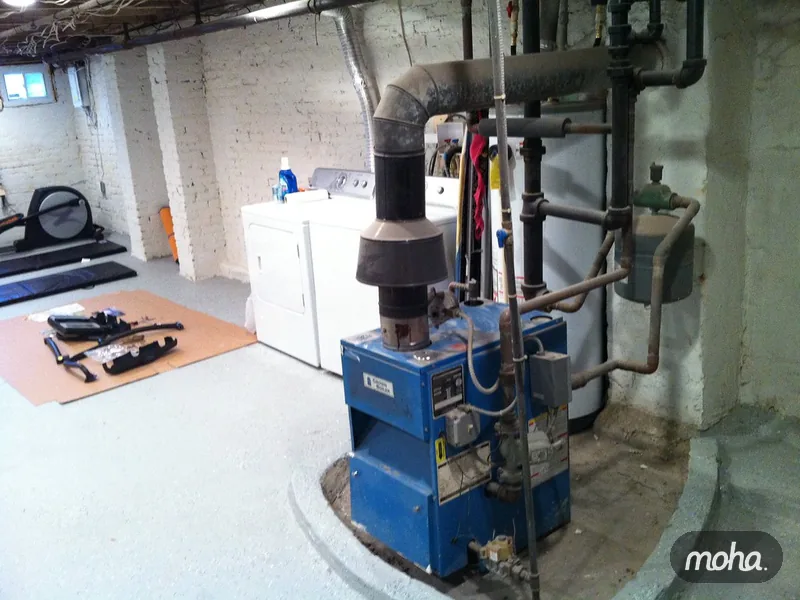
The calls that are not repairs
What an HVAC answering service should say when a caller smells gas
Read the pages that rank for this search and you will find a gas smell listed as an urgent call to route faster. Not one of them says what the person answering should tell the caller. That is the part with your company's name on it, and it is where we start.

CallerHi, I think I can smell gas in the basement. Can someone come out tonight?
ReceptionistPlease leave the house now. Don't switch any lights on or off, and don't use your phone inside. Once you're outside and away from the house, ring 911. I'm going to end this call so you can go.
Call ended. Your on-call technician is alerted with the caller's number and the time.
Why the gas call has to be short
The Pipeline and Hazardous Materials Safety Administration's guidance for a suspected natural gas leak in a home is blunt. Do not use a telephone or cell phone, because they can ignite airborne gas. Do not turn light switches on or off. Leave the area, and telephone 911 from a neighbour's house or somewhere well away from the leak, according to PHMSA's emergency response page. A caller who has rung your number about a gas smell is, very often, standing inside the house holding a phone.
So an answering service that keeps that caller on the line to take a name, an address, the age of the furnace and a preferred appointment time is doing the opposite of the guidance, however polite it sounds. The script we write for an HVAC company does three things in under half a minute: it tells the caller to leave now without touching switches, tells them to ring 911 once they are outside, and ends the call. The number they rang from is already in the log, so nothing is lost by not asking for it.
Then your company hears about it
The moment the call ends, whoever you name is alerted with the number, the time and a summary, so the follow up is a person from your company, by phone, once the caller is safe. PHMSA's list also tells people to make sure gas appliances are turned off. Whether your script repeats that is a decision for you and your gas utility; the default we write never asks a frightened caller to go looking for the source of a gas leak.
Ring your own after hours line from a phone the office does not recognise and say you can smell gas. Note what you are told and how long you are kept on the line.
Then decide whether that is what you want a customer to hear.
The carbon monoxide alarm
The Oregon State Fire Marshal's guidance for a sounding carbon monoxide alarm has the same shape: get everyone outside into fresh air immediately, call 911 from outside, account for everyone, and stay out until emergency responders say it is safe to return. Carbon monoxide cannot be seen, smelled or tasted, and the same guidance warns that exposure can impair judgment, so people may not realise they are in danger.
That last point is why the receptionist does not ask whether anybody feels unwell before it gives the instruction. The CDC describes the symptoms as often flu-like: headache, dizziness, weakness, an upset stomach, vomiting, chest pain and confusion. A caller who says they feel fine has not ruled anything out. On the CDC's figures, more than 400 Americans die from unintentional carbon monoxide poisoning not linked to fires each year, more than 100,000 visit an emergency department and more than 14,000 are hospitalised.
Why the call lands on an HVAC company's phone
Because the furnace is one of the usual suspects. The EPA lists leaking chimneys and furnaces, and back-drafting from furnaces and gas water heaters, among the sources of carbon monoxide in a home, and it passes on the Consumer Product Safety Commission's advice: a carbon monoxide alarm on each level, outside each sleeping area, and a professional inspection of every fuel burning appliance, furnaces included, every year. When the alarm goes off at night, the number many homeowners ring is the company whose sticker is on the furnace.
The same applies to smoke or fire from any unit. The receptionist treats it as a 911 call, not a booking, and your on-call person hears about it straight afterwards.
A receptionist, human or AI, telling a caller that a smell is probably nothing, or that an alarm is probably a low battery. That judgement belongs to the fire service and the gas utility, not to whoever answers your phone.
Your script is agreed with you and follows the emergency guidance in the area you serve. It is not safety advice from Moha.
Emergency or first thing in the morning
No heat, no cooling: which calls go to your on-call technician
Plenty of the calls that arrive after hours are real problems that are not dangerous. The work is deciding, in advance and in writing, which ones wake your technician and which ones get the first slot tomorrow.
People 65 and older
Named by the CDC as more prone to heat related illness, and older adults with inadequate heating are a hypothermia risk.
Babies and young children
They rely on others to keep them cool, and babies sleeping in cold bedrooms are on the CDC's hypothermia list.
Chronic medical conditions
Heat can be especially dangerous for people living with them, the CDC says, so ask about them on every call.
Sources: CDC, heat and health risk factors; CDC, hypothermia risk factors; read October 2026.
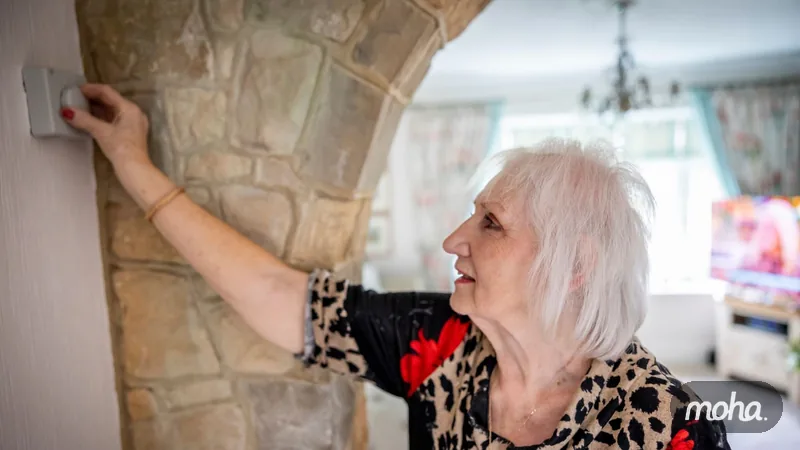
Start from who is in the house
The CDC's risk groups make a sensible default. For heat, the CDC names people aged 65 or older, infants and young children who rely on others to keep them cool, and people with chronic medical conditions, and it flags homes where air conditioning is not available. For cold, its hypothermia risk factors include older adults with inadequate food, clothing or heating, and babies sleeping in cold bedrooms.
So the receptionist asks one question on every no heat or no cooling call: is there anybody in the home who is very young, elderly or unwell? If the answer is yes, the call follows your emergency rule. If it is no, it follows your next visit rule. The question takes five seconds, and it is the one most message taking scripts leave out.
Then the weather, and your own rules
You set the rest. Some companies treat any no heat call below a set outside temperature as an emergency. Some treat no cooling as an emergency only during a local heat advisory. Some always send maintenance plan members to the front of the queue. We write the rule as you run it, with the thresholds you choose, and the receptionist applies it the same way on the first call of the night and the fortieth.
How the transfer actually works
An emergency goes to whoever is on call, with the caller still on the line and a short summary sent ahead: name, address, what has failed and who is in the house. If the on-call number does not pick up, the receptionist tries the next one on your rota. If nobody answers, the caller is told plainly that a technician will ring back, the job is flagged as urgent and the summary waits at the top of the morning list. Nobody is promised a visit that has not been arranged.
That is the difference between dispatch and a message. A message tells your technician a customer rang. A transfer puts the customer and the technician on the same call, with the facts already in front of them, while the house is still cold.
Who is on call, on which nights, on which number, and who is next if they do not answer.
What counts as an emergency, by occupant, outside temperature and system.
What a caller is told when nobody picks up.
Which customers go to the front of the queue.
Peak season
The first heat wave and the first cold snap
The Bureau of Labor Statistics describes the trade's hours in plain words: HVAC technicians may be on call for emergencies, and sometimes work overtime or irregular schedules during peak heating and cooling seasons. The phone keeps the same hours, only harder.
The year an HVAC phone has, in outline
Illustrative, drawn from the Bureau of Labor Statistics description of peak heating and cooling seasons and the quieter months between them. Your own call log sets the real dates; in a warm state the cooling band runs longer.
Fifty calls on the first hot afternoon
Air conditioning is used in 88% of US households, according to the EIA's 2020 survey, and two thirds of households cool with central air conditioning or a central heat pump. The first properly hot day of the year finds out which of those systems were not serviced in spring. A front desk with one person answers one call at a time; the rest ring out or sit in a queue. An AI receptionist takes each call as it arrives, so the afternoon that would have sent thirty callers to the next company on the map becomes thirty bookings, transfers and messages, sorted by urgency.
What it will not do is invent capacity. The receptionist books only into the slots you have opened. When tomorrow is full it says so, offers the next real slot, and adds the caller to a waiting list if you run one. Overbooking a heat wave is how a company with good reviews collects a week of bad ones.
The cold snap is the same, with a different risk
The first freeze brings the no heat calls, the furnaces that have not run since March, and, in a gas heated market, the carbon monoxide alarms. It is the week the safety script is most likely to be used, which is why it is tested before the season rather than written during it.
The shoulder seasons fill the calendar
Spring and autumn are when tune up and maintenance visits should be booked, and when the phone is quiet enough to book them properly. The receptionist takes those calls in full: the system, the last service date, access, and a time that suits. For the marketing side of the same calendar, our page on HVAC SEO through the peak and shoulder seasons sets out what to publish and when, so the quiet months bring in the work that keeps technicians busy.
440,900 HVAC technician jobs in 2025, projected to grow 11 percent from 2025 to 2035.
Median pay of $61,010 in May 2025.
"They may be on call for emergencies." Source: Occupational Outlook Handbook.
On the line
What happens when the receptionist answers an HVAC call
The same order on every call, so the dangerous ones are caught first and the routine ones are booked properly.
Greeting
Your company name, a recording notice and a plain AI disclosure.
Safety check
Gas, carbon monoxide, smoke or fire: the safety script, 911, end of call.
Triage
Heating or cooling, what stopped, who is in the house, plan member or not.
Book or transfer
A real slot in your calendar, or a live transfer to whoever is on call.
Summary
Transcript and call summary in your CRM or inbox before the next call.
The greeting
Your company name, a short recording notice and a plain statement that the caller is speaking to your company's AI assistant. Callers who want a person can say so at any point. Telling them at the start costs a few seconds and saves the complaint from the caller who works it out halfway through.
The safety check comes before the booking
Whatever the caller opens with, the receptionist listens for a gas smell, a carbon monoxide alarm, or smoke or fire. Any of them stops the booking script and starts the safety one. Everything else goes to triage. The order matters, because a caller who starts with "my furnace is making a noise" may mention the smell only at the end.
Triage, then the booking
Heating or cooling, what has stopped, how long ago, who is in the house, and whether the customer is on a maintenance plan. Then the address, how to get in, the equipment if they know it, and a slot from your calendar while they are still on the line. The appointment carries all of it, so the technician arrives knowing what they are walking into rather than ringing the customer from the van.
The summary
Every call ends with a call summary and a transcript in your CRM or inbox: who rang, why, what was promised and what happens next. Calls that were not bookings, a supplier or a job applicant, are summarised too, so the morning starts with a list rather than a voicemail box.
Is anybody in the home very young, elderly or unwell?
Is it the heating or the cooling, and when did it stop?
Are you on a maintenance plan with us?
How do we get in, and is there a pet?
What we do
What our HVAC answering service covers
Ten things, set up for you and run for you, which together make a 24/7 HVAC answering service rather than a voicemail with a nicer greeting. The first three decide what happens on the calls that matter most; the rest decide whether the routine ones turn into jobs.
Every call answered, day and night
After hours, at lunch, on holidays, and when the office line is busy. Calls reach the receptionist by forwarding from the number you already have, so nothing changes for your customers except that somebody answers.
In a heat wave it takes each call as it arrives instead of queueing them.
The gas and carbon monoxide script
Written with you before anything else, following PHMSA and fire service guidance: leave, ring 911 from outside, end the call. Then an alert to the person you name, with the caller's number and the time.
Tested on our own calls before go live, and again before each heating season.
Emergency triage and on-call transfer
Your rules for what counts as an emergency, applied the same way on every call: who is in the house, the outside temperature, the system. Emergencies are transferred live to your on-call technician with a summary sent ahead.
If nobody answers, the next number on the rota, then an urgent flag.
Booking into your calendar
Real slots, offered while the caller is on the line. It works with Google Calendar and Outlook, and with field service software that offers an integration. If your board runs in ServiceTitan, Housecall Pro or Jobber, we check whether yours can take bookings directly before setup and tell you plainly if it cannot.
Maintenance plan members recognised
Plan members are the customers an HVAC company most wants to keep. When your CRM tells the receptionist who they are, it greets them as members, follows your priority rule, and books the tune up visits their plan includes.
Estimates and replacement enquiries
A caller asking about a new system is a different call from a repair. The receptionist asks what you want asked, the age of the current system, the size of the home, what is wrong with it, and books an estimate with the right person instead of a service call.
Spanish and other languages
The receptionist answers in Spanish and other languages your callers speak, and switches when the caller does. The script is checked in each language rather than machine translated and left, including the safety instruction.
Call summaries and transcripts
Every call written up in your CRM or inbox: who, why, what was promised, what happens next. Your dispatcher starts the day from a list, and you can read any call back when a customer remembers it differently.
The legal setup, done first
A recording notice in every greeting, an honest AI disclosure, and AI callbacks only where the caller asked for one. The rules are the business's responsibility, not the software's, so they are set up before the first call.
Read every month, and watched
Calls are reviewed each month and the script improved, so the receptionist gets better at your business rather than drifting. We also monitor for calls that stop arriving, a carrier fault or a forwarding setting changed by mistake, and tell you straight away.
Choosing the kind of service
AI receptionist, live answering service or voicemail
Nearly every page ranking for this search compares AI with live answering, and almost all of them are written by a company selling one of the two. Here is the comparison as we see it, including where ours is the wrong choice.
Voicemail is the expensive option
Voicemail costs nothing a month and it is still the most expensive way to answer an HVAC phone, because the caller with no heat often does not leave a message. They ring the next company on the map. For routine calls in a quiet week voicemail is survivable; for the emergency calls that pay for the on-call rota, it hands the job to somebody else.
A live answering service
A trained person on every call, usually billed by the minute or by the call, taking a message for your technician to return. For many companies that is enough, and some callers prefer a human voice. The weaknesses come from the model rather than the people: a busy month costs more, the script is often written for many kinds of business at once, and a message is not a booking.
An AI receptionist set up for heating and cooling
It books while the caller is on the line, applies your triage rules the same way every time, takes a heat wave's calls at once, and costs one flat monthly fee. It hands over to a person for anything it should not handle. It is not the cheapest option: an AI answering service app you configure yourself costs far less, and if your calls are simple and you are happy to write and test the script yourself, one may be all you need.
Whatever it is called, an HVAC virtual receptionist, an HVAC phone answering service, an HVAC call answering service or an HVAC contractor answering service, the questions are the same. Who wrote the script? What happens to the gas call? And is a message being sold to you as a booking?
A caller upset about a previous visit, a warranty dispute, or a commercial customer who wants their account manager. The receptionist recognises those and hands them over, or takes a full message if nobody is free.
Where the gas call comes from
Half of US homes heat with gas, and the share swings by state
How often your answering service meets the gas smell call depends on where you work. The EIA's Residential Energy Consumption Survey counts the main heating fuel of homes in every state.
Reading the chart
Nationally, natural gas is the main heating fuel in 51% of homes, 62.71 million of 123.53 million. In Utah it is 86%, in Illinois 78% and in Michigan 77%. In Florida it is 5%, and electricity heats 66% of homes. An HVAC company in Chicago and one in Tampa face different nights: the first meets the furnace, the gas smell and the carbon monoxide alarm in January, and the second meets the failed air conditioner in August.
The script follows the market. A heating heavy company gets the gas and carbon monoxide script tested hardest and its no heat rules written in the most detail. A cooling heavy company gets the heat wave rules and the overflow tested hardest. Both get both, because a gas furnace or a gas water heater can turn up in any service area.
Texas sits in between
In Texas, gas heats 42% of homes and electricity 51%, so a Texas company meets both nights in the same year: the first freeze and the first hundred degree week. Its rules need a winter half and a summer half, and so does its rota.
Natural gas as the main heating fuel, 2020: United States 51%, Utah 86%, Illinois 78%, Michigan 77%, Texas 42%, Florida 5%.
Air conditioning: 88% of households.
EIA, Residential Energy Consumption Survey 2020.
Where the calls start
Three places an HVAC customer finds your number
An answering service only answers the calls that reach it. Most HVAC calls start in one of three places, and each rings at a different time of day.
The call button on the map
Tapped by somebody standing in a cold hallway or a hot bedroom, so it rings at the worst hours. The hours on your Google Business Profile decide whether Google shows you as open when they search.
The number at the top of the page
Rung by people who read first: replacements, quotes, maintenance plans. Fewer of these calls are emergencies and more of them are worth thousands, which is why they deserve a booking, not a message.
Paid leads
Local Services Ads and search ads, paid per lead or per click. A missed call from a paid lead is money spent twice: once on the click and again on the job a competitor did instead.
The hours on your profile
Google asks a business to list its regular customer facing hours. For an HVAC company the honest reading is the hours in which a customer can reach someone who can book or dispatch help. An answering service that really books visits and transfers emergencies can be that cover, and the profile can then say so. We set out the detail, including special hours for holidays, on our page about how HVAC firms should set their Google hours.
What the profile must not do is claim 24 hours with nobody behind it. If your receptionist books routine visits at night but nobody will take an emergency transfer until six, list the hours you can honour, and let the receptionist book the rest. A profile showing open at midnight that sends a no heat call to voicemail is the review nobody wants.
Search heating repair near me on a phone at ten at night where you work, and ring each company in the map pack. What you hear is the standard your HVAC after hours answering service has to beat.
The phone rules
Recording, AI disclosure and calling customers back
An answering service is your business on the phone, so the rules that apply to your calls apply to it. They are set out in full on the page for our AI receptionist for small businesses. For an HVAC company, three points matter most.
Recording and transcripts
Federal law allows a call to be recorded when one party consents, under 18 U.S.C. 2511(2)(d), but some states go further: California Penal Code 632 requires the consent of everyone on a confidential call. A receptionist that writes call summaries is usually recording or transcribing to do it, so ours gives a recording notice in every greeting and the rule is met wherever your customers are.
Calling a customer back
Answering a call is not the same as making one. In February 2024 the FCC confirmed, in ruling FCC 24-17, that calls using AI generated voices count as artificial voice calls under the Telephone Consumer Protection Act, which generally need the called person's prior express consent. So an AI callback happens only where the caller asked for one, and the follow up after a gas or carbon monoxide call is made by a person from your company.
Telling callers it is AI
No single federal rule covers it, and several states are writing their own. We do not wait for them to settle: the greeting says it is your company's AI assistant, and the receptionist says so again if asked.
A summary of rules read in October 2026. Where your situation is unusual, we flag it for your own counsel rather than guessing.
Honest about fit
When an HVAC company does not need an answering service
Not all heating companies and cooling contractors need one. Three cases where we would tell you to keep the money.
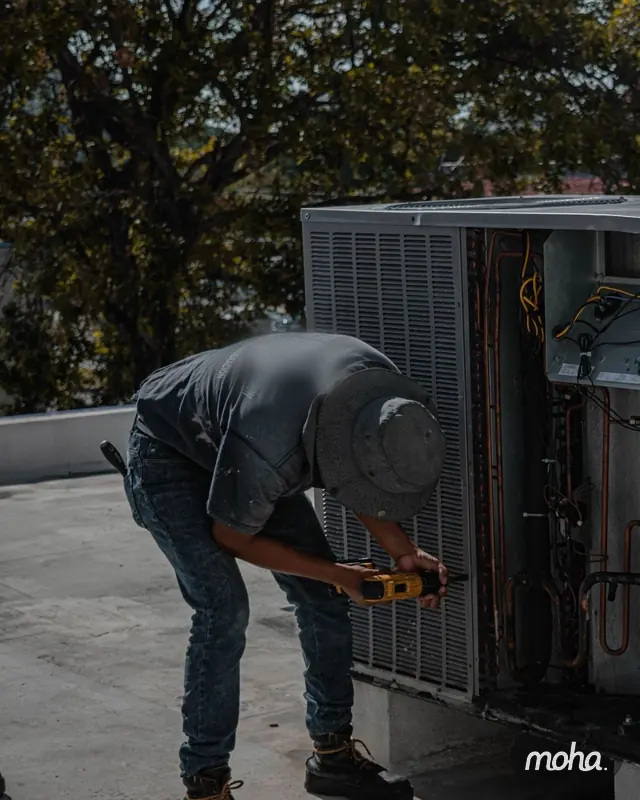
The owner who answers everything
A small HVAC business owner who genuinely answers every call, day and night, and does not mind doing it, does not need one. The useful question is whether that is still true in the first heat wave, on a roof, under a house, or at a child's school play, because those are the calls that go elsewhere.
A company with a night dispatcher
If someone on your payroll answers the phone overnight and can dispatch, an answering service adds little at night. It can still pay for itself on overflow during peak season, and on the lunch breaks, holidays and sick days that every office has.
A company that will not take night emergencies
Then the receptionist should not pretend otherwise. It books the first slot in the morning, tells the caller plainly that no technician is available overnight, and gives the safety instruction on any gas or carbon monoxide call as it always does. Your profile shows the hours you keep. Winning the night work can come later, if you decide to staff it.
Count last month's missed and voicemail calls by hour from your phone provider's log. If there are a handful, keep the money. If there are dozens, put them through the calculator below.

Why HVAC companies use Moha to answer their phones
Most answering products are sold as software: a voice, a calendar connection and a dashboard, then you write the script. Ours is a service. We write the triage rules with you, start with the gas and carbon monoxide script, connect your calendar and CRM, test it with the awkward calls before a customer hears it, and read the calls every month afterwards. You get one flat monthly fee and an AI receptionist for HVAC companies, built around the way an HVAC company actually works, from the no heat call at two in the morning to the tune up booked in April.
Safety script first
Gas and carbon monoxide handled before any booking.
Your rules, written down
Emergencies decided your way, every call.
Bookings, not messages
Real slots, offered on the call.
Flat monthly fee
A heat wave costs the same as a quiet week.
Spanish when needed
Checked scripts, not machine translation.
You own the data
Recordings and contacts stay in your accounts.
How it works
How we set up your HVAC answering service
Four steps, and nothing answers a customer until you have heard it yourself.
Free demo
Send your website. We build a short demo from your services, hours and service area, and give you a test line to ring with your own questions.
Your rules
A working session on your on-call rota, emergency rules, calendar and CRM, and the gas and carbon monoxide script, in your words.
Test calls
Our own calls with the awkward questions, a gas smell, a heat wave rush, a caller in Spanish, then yours. We give you the go live date at the demo.
Read and improved
Calls reviewed, the script improved, the safety script retested before each heating season, and an alert if calls stop arriving.
HVAC answering service pricing
What an HVAC answering service costs with Moha
One flat monthly fee, with no charge per call or per minute, so a heat wave month costs the same as a quiet one. Most businesses start around $1,200 a month. The exact figure is set after your free demo, by call volume, how many locations and phone lines are covered, and the integrations you need.
Would the answered calls pay for it?
At these numbers, the answering service returns 3.8 dollars of revenue for every dollar spent.
How to judge any HVAC answering service's price
Prices are quoted three ways: by the minute, by the call, or flat. Each can be fair. What matters is what your own year would cost, so ask every provider, ours included, the same questions before you compare numbers.
How is a heat wave month billed?
Per minute and per call plans look cheap in March and expensive in July. Ask for last summer's busiest week, priced on their plan, and what the overage rate is once the included minutes run out.
What counts as a billable call?
Wrong numbers, hang ups, spam, transfers to your technician and the time spent on hold during a transfer are billed differently by different providers. The difference adds up in a busy season.
Is a booking included, or only a message?
Some plans take a message and charge extra for calendar booking. Ask what the receptionist actually does on a routine call, and what it costs to have it book.
Who writes the script, and who changes it?
An app you configure yourself is cheaper because you are doing the work. A service costs more because somebody else is. Neither is wrong; just know which one you are buying.
One flat monthly fee for the script, the integrations, the legal setup and the monthly review, with no charge per call and no long contract.
If a quote from anyone, us included, will not say what a July costs, ask why.
How AI call answering works, from Google Cloud
A short explainer from Google Cloud on contact centre AI: software that answers a customer's call, understands what they need, and hands over to a person when it should.
It is the kind of technology an answering service like ours is built on. What the video cannot show is the part that is yours: the rules for your on-call rota, your calendar, and what is said to a caller who smells gas.
Questions
HVAC answering service questions owners ask
Taken from what HVAC owners ask in trade groups and forums, and from the phrasings people type into a search box.
How much does an HVAC answering service cost?
It depends on how it is priced. Live answering services usually bill by the minute or by the call, and AI apps you set up yourself can be cheap. Ours is a managed service at one flat monthly fee, starting around $1,200 a month for most businesses, set after a free demo by call volume, locations and integrations, with no charge per call.
What should an answering service tell a caller who smells gas?
To leave now without using light switches or the phone indoors, and to ring 911 from outside, a neighbour's house or somewhere well away, which follows PHMSA's guidance. Then the call should end. Keeping the caller inside to take details is the opposite of that guidance. Your company is alerted straight afterwards.
What if the carbon monoxide alarm is going off?
The receptionist tells the caller to get everyone outside into fresh air and ring 911 from outside, the same instruction fire services give, without first asking whether anyone feels ill. Carbon monoxide symptoms are often mistaken for flu and exposure can impair judgment. Your on-call person is alerted at once.
Can it dispatch or transfer to my on-call technician?
Yes. Emergencies, by the rules you set, are transferred live to whoever is on call, with a summary sent ahead. If that number does not answer, it tries the next one on your rota, then flags the job as urgent and tells the caller honestly what happens next.
Does it book into ServiceTitan, Housecall Pro or Jobber?
It books into Google Calendar and Outlook, and into field service software that offers an integration. We check whether your ServiceTitan, Housecall Pro or Jobber account can take bookings directly before setup and tell you plainly if it cannot, rather than promising it on a sales call. Where it cannot, the booking arrives as a summary for your dispatcher.
Is a no heat call an emergency?
Sometimes. The default we suggest follows the CDC's risk groups: if a baby, an older person or someone unwell is in the home, it is treated as an emergency; otherwise it gets the first available slot. You set the final rule, including any outside temperature threshold.
Can it cope with fifty calls on the first hot day?
It answers each call as it arrives rather than queueing them, so no caller rings out. It books only into the slots you have opened, offers the next real slot when tomorrow is full, and sorts the day's calls by urgency for your dispatcher.
Is AI good enough for HVAC calls, or do I need live answering?
For booking, triage, transfers and the safety script, an AI receptionist set up properly handles the calls well and consistently. Some callers prefer a person, and some calls need one, a complaint or a warranty dispute, so ours hands those over. If every caller you have wants a human voice, a live answering service may suit you better.
Will callers know they are talking to an AI?
Yes. The greeting says it is your company's AI assistant and it says so again if asked. Callers who want a person can ask for one at any point. A caller told at the start knows where they stand; one who works it out halfway through feels misled.
Can it answer in Spanish?
Yes, and in other languages your callers speak. It switches when the caller does, and each script, including the gas and carbon monoxide instruction, is checked in that language rather than machine translated.
Can I keep my existing number?
Yes. Calls reach the receptionist by forwarding from your current provider, after hours, when the line is busy or when nobody picks up. Remove the forwarding and your number works exactly as it did before.
Should my Google profile say I am open 24 hours?
Only if somebody, a person or a receptionist that really books and transfers, can help a customer at any hour. If emergency transfers stop at midnight, list the hours you can honour. Hours you cannot keep cost you reviews.
Can it handle maintenance plan customers and tune up bookings?
Yes. When your CRM tells it who your plan members are, it recognises them, applies your priority rule, and books the tune up visits their plan includes. Shoulder season tune up calls are booked in full, with the system and access details.
How long does setup take?
Forwarding a phone to an app takes minutes. A receptionist that triages HVAC calls correctly takes longer: the session on your rules, the script, the calendar and CRM connections, and test calls including a gas smell and a heat wave rush. We give you the go live date at the demo, and nothing answers a customer before you have heard it.
Who owns the call recordings and customer details?
You do. Recordings, summaries and contacts are kept in your own accounts and CRM, so if you stop working with us, everything stays with you.
How do I choose the best HVAC answering service?
Ring each one's demo line and say you can smell gas. Then ask how a heat wave month is billed, whether it books or only takes messages, how it transfers to your on-call technician, and who owns the recordings. The best answering service for an HVAC company is the one whose answers you can check, not the one with the longest feature list.
Do I need one if I am a small HVAC business?
Not if you genuinely answer every call yourself and the missed call log shows only a handful a month. A small HVAC business answering service pays for itself when the log shows dozens, usually in peak season and after hours. The calculator above uses your own numbers.
Is there a long contract?
No. A start long enough to judge it fairly, then no notice period holding you after that.
Free demo
Hear the receptionist answer your calls before you pay
Send your website and we will build a short demo from it, your services, your hours and your service area, and give you a test line. Ring it at night. Ask for a tune up, say the heating has stopped with a baby in the house, and say you can smell gas. Then decide. If you work in plumbing or electrical as well as heating and cooling, the same receptionist can answer for every trade under one roof.
No call required.
Photographs: Gas furnace by Bonnie Bogle, CC BY 2.0 via Openverse, cropped with the Moha logo added. Via Pexels: a call at night by Mathias Reding, adjusting the heating by Centre for Ageing Better, a blanket and a hot drink by Kaboompics, a house under snow by Anurag Jamwal, supply ductwork by Jonathan Cooper, and a rooftop repair by José Andrés Pacheco Cortes, with a shirt print blurred.