
Home / Services / AI Receptionist / Dental Answering Service

For dental practices

Dental Answering Service That Knows Which Calls Cannot Wait

A dental answering service spends most of its day on ordinary calls: a new patient, a cleaning moved to Thursday, a question about whether you take a plan. Its real test is the call at eight in the evening from a parent holding a tooth that came out in a fall, because the next half hour decides whether it can be saved. Moha's AI receptionist is set up for practices in that order: the urgent calls recognised and put through to whoever is on call, the routine ones booked into your calendar, and every call handled under a signed business associate agreement.

Thank you. We have your details and will send the audit back shortly.

We build a short demo from your website and give you a test line to ring. No call required.

Urgent calls put through · BAA signed first · No clinical advice, ever
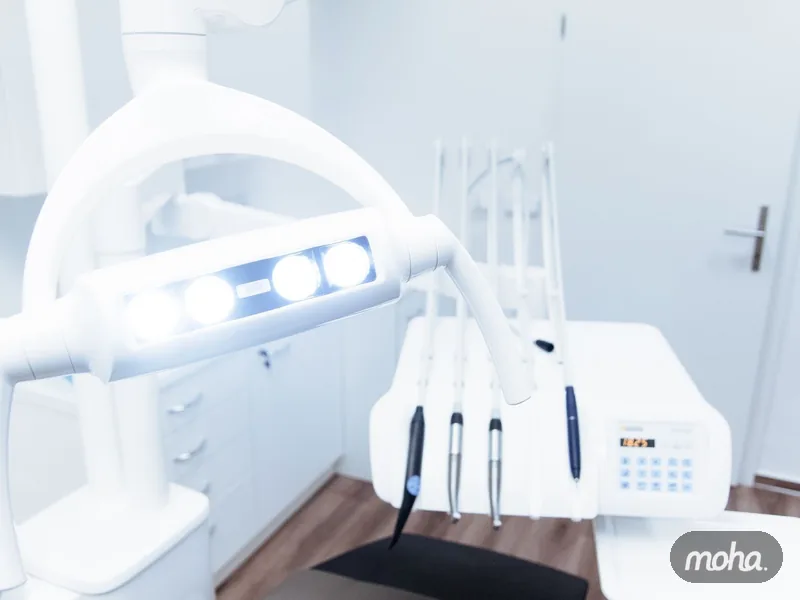
An empty dental treatment room with the overhead light on and instruments hanging from the unit
The surgery closes at five. The calls do not
136,140offices of dentists in the United StatesCensus Bureau, County Business Patterns 2022
30 minthe window for seeing a dentist after a tooth is knocked outAmerican Association of Endodontists
3conditions the ADA treats as a dental emergency: bleeding, airway swelling, facial traumaAmerican Dental Association
1,031,957people working in US dental officesCensus Bureau, County Business Patterns 2022

The calls that cannot wait

What a dental answering service should do in the first minute

Every page selling this service says urgent calls are routed to the on-call dentist. None of them defines an urgent call, and none says what the person answering should tell a caller whose tooth has just come out. Those two things are the job.
Seven dental calls, and what the receptionist does with each THE CALLER SAYSWHAT THE RECEPTIONIST DOESWHYSwelling, and it is hard tobreathe or swallowTells them to ring 911 now, then alerts the on-calldentist.ADA: swelling that may compromisethe airwayThe bleeding will not stopStraight through to the on-call dentist; if nobody answers,the emergency room, by your rule.ADA: uncontrolled bleedingAn adult tooth has been knockedoutReads the AAE steps, then puts them through to the on-calldentist at once.AAE: see a dentist within 30minutesA child's baby tooth came out in afallNo first aid advice. Straight through to the on-calldentist.The dentist decidesSevere toothache, or a swollen gumOn-call dentist or the first urgent slot, by the rule youset.ADA: urgent careA lost crown or a broken filling,no painBooks the next available appointment.Routine unless painfulNew patient, a cleaning, aninsurance questionBooks it, and answers insurance from your list of acceptedplans.Routine
Sources: ADA, What Constitutes a Dental Emergency?; American Association of Endodontists, knocked out teeth; read October 2026. Every rule is agreed with the practice before go live.
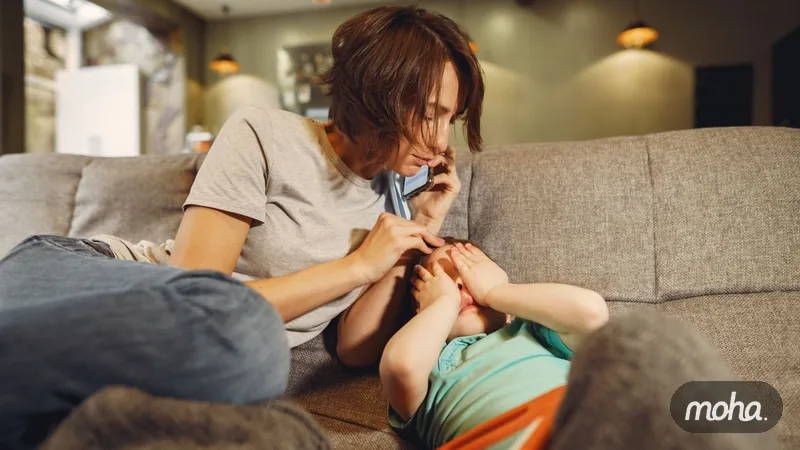
A mother on the phone comforting her child, who is covering his face, on a sofa at home
Thirty minutes starts when the call does
Example call at 8:40 p.m., the kind of script we write with your dentists

CallerMy son came off his bike and one of his front teeth has come out. His mouth is bleeding a bit.

ReceptionistLet's sort this quickly. Is it one of his adult teeth, or a baby tooth?

CallerAdult. He's eleven.

ReceptionistPick the tooth up by the white part, not the root. If it's dirty, rinse it gently with water only. If you can, put it back in the gap; if not, put it in a glass of milk. I'm putting you through to the dentist on call now, so please stay on the line.

Transferred to the on-call dentist, with the caller's name, number and what happened sent ahead.

The ADA's definition, not ours

The American Dental Association's guidance on what constitutes a dental emergency calls emergencies potentially life threatening, and lists three: uncontrolled bleeding, a soft tissue infection with swelling inside or outside the mouth that potentially compromises the airway, and trauma involving the facial bones that potentially compromises the airway. It lists urgent care separately: severe pain from an inflamed nerve, an abscess with localised pain and swelling, a fractured tooth that hurts or cuts the soft tissue, and dental trauma where a tooth has been knocked out or displaced.

That gives whoever answers the phone a defensible order of priority. A caller who says the swelling is making it hard to breathe or swallow is told to ring 911 now; the dentist is alerted afterwards. Bleeding that will not stop goes straight to the on-call dentist. The urgent list goes to the on-call dentist or the first urgent slot, by the rule you set. Everything else is booked.

The knocked out tooth, step by step

The American Association of Endodontists' advice is short and specific. Pick the tooth up by the crown, the chewing surface, not the root. If it is dirty, rinse it gently with water only, no soap and no scrubbing. Try to put it back in its socket straight away. If that is not possible, keep it moist, in milk or in the mouth next to the cheek, not in tap water. Then act quickly: the AAE says to see a dentist or endodontist within 30 minutes.

A receptionist that reads those steps and then transfers the call has used the half hour well. One that takes a message for the morning has not. That is the difference the whole service exists for.

Worth doing tonight

Ring your own number after hours and say your child has knocked out a tooth. Time how long it takes to reach someone who can help, and note what you are told to do with the tooth.

Then decide whether that is the answer you want a parent to hear.

Baby teeth are the dentist's call

The AAE's steps are written for adult teeth. A baby tooth is a different decision, and it belongs to a dentist, not to a receptionist reading from a script. So the first question on every knocked out tooth call is whether the tooth is an adult or a baby tooth, and for a baby tooth the receptionist gives no first aid instruction at all. It puts the parent through to the on-call dentist and lets the dentist advise.

What it never does

It never tells a caller a symptom is probably nothing, never suggests medication, never says whether a tooth can be saved and never diagnoses. The ADA's own guidance ends by saying dentists should use their professional judgment in deciding who needs urgent or emergency care. The answering service's job is to get the right caller to that judgment quickly, with the facts already written down.

Agreed before go live

Who is on call, and on which nights. The words of the knocked out tooth script, approved by your dentists. When bleeding goes to the dentist and when to the emergency room.

Nothing clinical is said that your practice has not approved.

Emergency, urgent, routine

Three kinds of dental call, and who each one reaches

The ADA's three bands map neatly onto three ways a call can end: 911 or the dentist now, the dentist tonight or the first urgent slot, and the calendar.

Emergency

Bleeding that will not stop, swelling that may affect the airway, facial bone trauma. The caller is told what to do now and the dentist hears straight away.

Urgent

A severe toothache, an abscess, a broken tooth that hurts, a tooth knocked out or pushed out of place. The on-call dentist or the first urgent slot, by your rule.

Routine

Checkups, cleanings, a filling with no pain, new patients and insurance questions. Booked while the caller is on the line.

Bands from the ADA's What Constitutes a Dental Emergency? (updated March 2021). The practice sets the final rule.


A woman in pain holding a cold compress against her cheek
Pain and swelling: your urgent rule
Two glasses of milk on a kitchen table
Milk keeps a knocked out tooth moist

Patients of record and everyone else

Many practices treat an urgent call from an existing patient differently from a stranger who found them on the map at nine at night. Some put both through; some see their own patients first and offer the stranger the first urgent slot in the morning. Neither is wrong, and the receptionist applies whichever you choose, because your CRM or practice software tells it who is already a patient.

The rota, and what happens when nobody answers

Urgent calls go to whoever is on call that night, with the caller still on the line and a short summary sent ahead: name, age, what happened and when. If the first number does not answer, the receptionist tries the next. If nobody answers at all, the caller is told so plainly, given the instruction your dentists have approved for that situation, and the call is flagged at the top of the morning list. Nobody is promised a call back that has not been arranged.

Asked on every urgent call

Is anyone struggling to breathe or swallow?

Is the bleeding under control?

Is it an adult tooth or a baby tooth?

Are you already a patient here?

Before the first call

HIPAA, the business associate agreement and what is taken on a call

A dental practice is a covered entity. Anything that answers its phone and writes down who called and why is handling protected health information on its behalf, and the rules follow the information.

A signed BAA

We sign a business associate agreement before any patient calls reach the receptionist. Without one, the script takes no clinical details.

Only what is needed

Name, number, the reason for the visit and urgency. Not histories, not insurance numbers read aloud, not anything the booking does not need.

Records stay yours

Recordings, transcripts and summaries live in your own accounts and CRM, so they leave with you if you ever leave us.

What the rule actually says

Under 45 CFR 164.502(e), a covered entity may disclose protected health information to a business associate only once it has satisfactory assurance that the information will be safeguarded, and those assurances have to be documented in a written contract or other written agreement. An answering service that books appointments and summarises calls for a practice fits that description. So the first question to put to any answering service for a dental office is whether it will sign a business associate agreement, and the honest answer is the only acceptable one.

We sign one for every practice before go live. Where a practice prefers to keep the receptionist away from clinical detail altogether, the script is written so that it takes only what a booking needs and passes everything else to the team.

A BAA is necessary, not sufficient

The agreement covers the paperwork. The script decides what is actually said and recorded. That is why the minimum necessary questions are written into it, why insurance member numbers are not read back aloud on a recorded line, and why clinical questions are handed over rather than answered.

Not legal advice

A summary of the rule as read in October 2026. Your own compliance lead or counsel should review the BAA, as they would any other vendor's.

On the line

What happens when the receptionist answers a dental call

Five steps, in the same order every time, so the urgent calls are caught before anybody starts looking for a cleaning slot.

1

Greeting

The practice's name, a recording notice and a plain line saying it is the practice's AI assistant.

2

Urgent check

Breathing, bleeding, a knocked out tooth, severe pain or swelling: the urgent route.

3

Who is calling

Existing patient or new, adult or child, and which dentist they usually see.

4

Book or transfer

A real slot in your calendar, or a live transfer to whoever is on call.

5

Summary

Call summary and transcript to your CRM or inbox, under your BAA.

Why the urgent check comes second

Callers rarely open with the important part. A parent might start with "can I book an appointment for my son" and only mention that the tooth is in a glass of milk when asked what the appointment is for. So the receptionist asks what happened before it asks when they would like to come in, and anything on the urgent list takes the call down the urgent route straight away.

Booking the routine call properly

For everything else, the booking carries what your team needs on the day: new or existing patient, the reason for the visit, the dentist or hygienist they see, and whether they have mentioned an insurance plan. New patients are asked what you want asked, and nothing else.

The morning list

Every call ends in a summary: who rang, why, what was booked or promised, and anything that needs a person. The front desk starts the day with that list rather than a voicemail box, and a dentist can read back any urgent call from the night before.

What a new patient is asked

Name and number. What the visit is for. Whether they have a plan they want to use. How they found you. Anything else only if you ask for it.

During opening hours too

Lunch, the morning rush and the calls the front desk cannot reach

Most calls a practice misses are not at midnight. They arrive while the only person at the desk is checking a patient in, taking a payment or on another line.

A receptionist in scrubs checking a tablet at a practice's front desk
One person, three jobs, and the phone ringing

Overflow, not replacement

The receptionist can take only the calls your team cannot: when the line is busy, when nobody picks up within a set number of rings, over lunch and after closing. Your front desk keeps the calls it answers today. What changes is that the call that would have gone to voicemail at 12.40 is booked instead of lost to the practice down the road. That is what most practices actually want from a phone answering service for dental offices: cover for the gaps, not a second front desk.

Cancellations, moves and the gaps they leave

Patients who need to cancel or reschedule an appointment are handled on the call, and the freed slot shows in your calendar straight away. If you keep a short notice list of patients who want an earlier appointment, the summary flags the gap so your team can fill it. A no show is not something an answering service can prevent, but a patient who can cancel at nine at night instead of simply not turning up leaves a slot you can still use.

Recall and hygiene appointments

Patients ringing back about a recall letter or a hygiene reminder are booked into the hygiene slots you open, with the right appointment length. Many practices send those reminders and then cannot answer the replies; the receptionist closes that loop.

Worth checking this week

Pull last month's missed calls from your phone system by hour. Most practices find the peaks at opening, at lunch and in the first hour after closing.

What we do

What our dental answering service covers

Ten things, set up and run for the practice. Together they make a dental after hours answering service and a daytime overflow line in one, rather than two products and two contracts.
Two members of a practice team in scrubs at the reception desk
Built around your team, not instead of it
01

Calls answered day and night

After hours, at lunch, on holidays and whenever the line is busy. Calls arrive by forwarding from the number patients already know, so nothing about how they reach you changes.

24/7OverflowYour number
02

The urgent call script

The ADA's emergency and urgent bands, the AAE's knocked out tooth steps, and the adult or baby tooth question, written with your dentists and approved before go live.

Approved wording911 when neededNo diagnosis
03

On-call transfer

Urgent calls go live to whoever is on call, with a summary sent ahead. If nobody answers, the next number on your rota, then a clear flag for the morning.

Your rotaLive transferMorning flag
04

Booking into your calendar

Real slots offered while the patient is on the line. It works with Google Calendar and Outlook, and with practice management software that offers an integration. Whether yours is Dentrix, Eaglesoft, Open Dental or another, we check it can take bookings before setup and tell you plainly if it cannot.

Live slotsRight appointment lengthChecked first
05

New patient enquiries

New patients are welcomed, asked only what you want asked, and booked into new patient slots. The summary tells your team how they found you.

New patient slotsYour questionsSource noted
06

Insurance questions, answered honestly

"Do you take my plan?" is answered from your own list of accepted plans. What a plan will pay for a treatment is a benefits question for your team, so it is passed on, never guessed.

Accepted plans listNever guessedHanded over
07

Spanish and other languages

The receptionist answers in Spanish and the other languages your patients speak, and switches when the caller does. The urgent script is checked in each language, not machine translated and left.

SpanishSwitches on requestChecked scripts
08

Summaries and transcripts

Every call written up in your CRM or inbox under your BAA. The front desk starts the day from a list, and any call can be read back when a patient remembers it differently.

Call summaryTranscriptUnder your BAA
09

The phone rules, set up first

A recording notice in the greeting, a plain AI disclosure, AI callbacks only where the caller asked for one, and the BAA signed before the first call.

Recording noticeAI disclosureBAA
10

Reviewed every month

We read the calls each month and tighten the script, so it keeps up with your practice. We also watch for calls that stop arriving, a carrier fault or a changed forwarding setting, and tell you at once.

Monthly reviewScript updatesMonitoring

Where the line sits

What it answers, what it hands over, and how that compares

The safest phone cover for a practice is the one that knows exactly where its job ends. This is the line we draw for every practice.

The receptionist's side of the line, and your team's What the receptionist answersfrom your own detailsHours, location, parkingFrom your own detailsBooking, moving, cancellingInto the slots you openDo you take my plan?From your list of accepted plansNew patient detailsTaken under your BAAEverything a caller needs to book or turn up.What goes to your teamhanded over, never guessedSymptoms and clinical questionsTo the dentist, never answeredWhat a plan will payBenefits are your team's questionRecords and billing disputesTo the office, with a summaryAnyone who asks for a personTransferred, or a full messageThe receptionist never gives clinical advice.
How we set the boundary for practices. Your own list can be narrower; it is never wider.

A live answering service

A person on every call, usually billed by the minute or by the call, taking a message for your team or your on-call dentist. Some patients prefer a human voice, and for a practice whose calls are mostly complicated that may be the better choice. The limits come from the model: a busy month costs more, the person answering may be covering dozens of businesses that night, and a message is not a booking.

Voicemail

Cheap, and least suited to the calls that matter most. The parent with a knocked out tooth is unlikely to leave a message and wait; they ring the next practice on the map, and that practice gains a family.

An AI receptionist set up for a practice

It books while the patient is on the line, applies your urgent rules the same way every time, answers several calls at once in the Monday morning rush, and costs one flat monthly fee. It hands anything clinical or awkward to a person. It is not the cheapest route; an AI answering service app you configure yourself costs much less, and if your calls are simple and you are happy to write the scripts and sign the BAA paperwork yourself, that may be enough.

Whatever the label, a dental virtual receptionist, a dental phone answering service or a dental call answering service, the same three questions sort them: who approved the urgent script, will they sign a BAA, and is a message being sold as a booking?

When a person should answer

A patient upset about treatment or a bill, a records request, or anyone who simply asks for a person. The receptionist hands those over, or takes a full message if nobody is free.

The market you are in

Where the dental offices are

The Census Bureau counts offices of dentists under code 621210. These are the ten states with the most.

Offices of dentists, top ten states California22,642Texas11,845Florida9,002New York8,093Illinois5,857Pennsylvania4,708New Jersey4,582Ohio3,883Michigan3,821Washington3,686
Census Bureau data: County Business Patterns, 2022 release, code 621210. United States: 136,140 offices employing 1,031,957 people.

What the count means for your phone

California has 22,642 offices of dentists, Texas 11,845 and Florida 9,002. In a city with hundreds of practices, a patient with a dental problem in the evening has plenty of numbers to try, and most will try the next one rather than wait for a call back. The practice that answers is the one that gets the visit, and very often the family that comes with it.

The same count explains why the map is crowded. How your practice appears there, including the separate listings that dentists themselves can have, is covered on our page about how practitioner listings and dental profiles work, and the treatment pages that win planned work are the subject of SEO for the treatments a practice wants.

The numbers, plainly

136,140 offices of dentists employing 1,031,957 people. California 22,642, Texas 11,845, Florida 9,002.

County Business Patterns 2022.

The phone rules

Recording, telling callers it is AI, and calling patients back

Beyond HIPAA, the ordinary phone rules apply to a practice's answering service exactly as they apply to any business. They are set out in full under the phone rules every receptionist we run follows; here is what matters for a practice.

Recorded calls

Federal law, at 18 U.S.C. 2511(2)(d), allows recording when one party consents, but some states ask for more; California Penal Code 632 requires every party's consent to record a confidential conversation. Our greeting carries a recording notice on every call, so a practice near a state line does not have to think about which rule applies.

Calling a patient back

An AI receptionist answering a call is one thing; one placing a call is another. The FCC's 2024 ruling, FCC 24-17, treats AI generated voices as artificial voice calls under the Telephone Consumer Protection Act, which generally need the called person's prior express consent. So the receptionist calls back only when a patient has asked it to, and follow up on an urgent call comes from your own team.

Saying it is AI

There is no single federal rule yet, and states are writing their own. We do not wait for them: the greeting says the caller is speaking to the practice's AI assistant, and it says so again if asked.

Not legal advice

A summary of rules read in October 2026. Anything unusual about your practice is flagged for your own counsel.

Honest about fit

When a practice does not need a dental answering service

Some practices are better off keeping things as they are. Three we would tell to save the money.
A practice that already answers every call

If your front desk is fully staffed through the day, someone covers lunch, and your dentists already share an after hours line they genuinely answer, there is little left for an answering service to catch. Check the missed call report before believing it, but it does happen.

A practice that wants clinical triage on the phone

If you want callers' symptoms assessed by phone, that is a job for a clinician or a nurse triage service, not for an AI receptionist. Ours recognises urgent calls and puts them through; it does not assess them.

A practice that will not keep an on-call rota

Then the urgent script should not promise one. The receptionist can still book the first urgent slot, give the 911 instruction where the ADA's emergency list applies, and say plainly that no dentist is available overnight. That is honest, and better than a voicemail, but it is a smaller service and priced like one.

A quick test

Count last month's missed and voicemail calls by hour. A handful: keep your money. Dozens, especially at lunch and after five: run the calculator further down.

A practice reception area with two staff members behind the desk
Why Moha

Why practices use Moha to answer their phones

Most products sold as an AI receptionist for dentists arrive as software: a voice, a calendar connection and a settings page, and then the practice writes everything else. Ours is run for you. We write the urgent script with your dentists from the ADA's bands and the AAE's steps, sign the BAA before the first call, connect your calendar and CRM, test it with the hard calls before a patient hears it, and read the calls every month afterwards. It is an AI dental receptionist built around how a practice actually runs, for one flat monthly fee.

Urgent calls first

Recognised, scripted and put through.

BAA before go live

Signed before any patient calls.

No clinical advice

Only words your dentists approved.

Bookings, not messages

Real slots, on the call.

Plans answered properly

From your accepted list.

Your records

Kept in your own accounts.

How it works

How a practice goes live

Four stages. No patient hears the receptionist until your team has.

1Start

Demo and test line

From your website we build a short demo with your hours, services and the plans you accept, and give you a number to ring.

2Next

BAA and rules

The business associate agreement signed, then a session with your team on the rota, the urgent script and your new patient questions.

3Before launch

Hard call testing

We ring it with a knocked out tooth, a swollen face, an insurance question and a caller in Spanish, then you do. The go live date is agreed at the demo.

4Ongoing

Monthly review

Calls read, the script tightened, and an alert if calls stop arriving.

Pricing

What a dental answering service costs with Moha

A flat monthly fee with no charge per minute or per call, so a busy January of new patient calls costs the same as a quiet August. Most businesses start around $1,200 a month; the figure for your practice is set after the free demo, by call volume, the number of locations and lines, and the integrations involved.

Would the answered calls cover it?

12booked visits a month
$3,600revenue a month
3.0xrevenue for each dollar spent
14missed calls a month to break even

At these numbers, the answering service returns 3.0 dollars of revenue for every dollar spent.

Comparing quotes from answering services for dentists

Per minute, per call and flat fees can all be fair. What matters is what your own year costs, so put the same questions to every provider, including us, before comparing the headline numbers.

What does a busy month cost?

Ask for your busiest month last year priced on their plan, with the overage rate once included minutes run out. Per minute plans look cheapest on the quietest month of the year.

Will they sign a BAA, and on which plan?

Some providers include it on every plan, some only on higher tiers. If a provider will not sign one, the conversation is over.

Does it book, or only take messages?

A message still needs your team to ring the patient back, often after they have booked elsewhere. Ask what happens on a routine call, end to end.

Who wrote the urgent script?

If the answer is "the software", ask what it tells a parent holding a knocked out tooth. Then ask who approved those words.

Our answer, in one line

One flat monthly fee covering the script, the BAA, the integrations and the monthly review, with no per call charge and no long contract.

Watch

How AI answers a call and hands it on, from Google Cloud

A short explainer from Google Cloud on contact centre AI: software that answers, works out what the caller needs and passes the call to a person at the right moment.

That is the technology underneath. What a practice adds is the part software cannot: the on-call rota, the words your dentists approve for a knocked out tooth, and the line where the receptionist stops talking and a person takes over.

Questions

Dental answering service questions practices ask

From practice owners and office managers in dental forums and groups, and from what people type into a search box.

Live services usually bill by the minute or the call, and AI apps you configure yourself can cost very little. Ours is a managed service at one flat monthly fee, starting around $1,200 a month for most businesses, set after a free demo by call volume, locations and integrations, with no per call charge.

It first asks whether it is an adult or a baby tooth. For an adult tooth it reads the American Association of Endodontists' steps: hold it by the crown, rinse with water only if dirty, put it back if possible or keep it in milk, and see a dentist within 30 minutes. Then it puts the caller through to your on-call dentist. For a baby tooth it gives no first aid and puts them straight through.

The ADA lists uncontrolled bleeding, swelling that may compromise the airway, and facial bone trauma that may compromise the airway as emergencies, with severe pain, abscesses, painful fractures and knocked out teeth as urgent care. Your practice sets the final rule; your dentists' judgment always decides.

Compliance comes from how the service is set up and from a business associate agreement between the practice and the provider. We sign a BAA before any patient calls reach the receptionist, take only the details a booking needs, and keep recordings and summaries in your own accounts.

It books into Google Calendar and Outlook, and into practice management software that offers an integration. We check whether your system can take bookings directly before setup and tell you plainly if it cannot; in that case each booking arrives as a summary for your front desk to enter.

It answers whether you accept a plan, from the list you give us. What a plan will cover for a particular treatment is a benefits question, so it takes the details and passes it to your team rather than guessing.

Yes. The greeting says it is the practice's AI assistant, and it repeats that if asked. Patients can ask for a person at any point and are transferred or a full message is taken.

For booking, cancellations, new patient enquiries, plan questions and recognising urgent calls, a well set up AI dental receptionist handles the work consistently. If most of your calls are complicated or emotional, or your patients strongly prefer a person, a live service may suit you better; ours hands those calls to people anyway.

Yes. It can answer all calls after closing and take only overflow during the day: when the line is busy, when nobody picks up in time, and over lunch. You choose which.

Yes, and other languages your patients use. It switches when the caller does, and the urgent script is checked in each language before go live.

Yes. Calls are forwarded from your existing number by your phone provider, after hours, when busy or when unanswered. Turn the forwarding off and everything works as it did before.

Longer than an app, deliberately. The BAA, the session on your rota and urgent script, the calendar and CRM connections, and the test calls take some time, and we agree the go live date at the demo. Nothing answers a patient before your team has heard it.

The practice does. Recordings, transcripts and summaries are kept in your accounts and CRM, so if you stop using us, they stay with you.

Yes. An orthodontic answering service mostly handles appointment moves, broken bracket and loose wire calls, and new patient consultations; the urgent rules are written with your orthodontists, and the ADA lists wires or appliances cutting the inside of the mouth as urgent care.

Ring each provider's demo line and say your child has knocked out a tooth. Then ask whether they will sign a BAA, how a busy month is billed, whether they book or only take messages, and who keeps the recordings. The right provider for your practice is the one with the clearest answers to those five.

No. There is a start period long enough to judge it fairly, and no notice period holding you after that.

Free demo

Hear it handle your hardest call before you decide

Send your website and we will build a short demo from it, your hours, services and accepted plans, and give you a test line. Ring it after closing. Book a cleaning, ask whether you take a plan, and say a tooth has been knocked out. Then decide. Practices that also want more patients finding them in the first place can pair it with our local and dental search work.

Thank you. We have your details and will send the audit back shortly.

No call required.

Photographs via Pexels, each cropped with the Moha logo added: a treatment room by Daniel Frank, a call at home by Gustavo Fring, a cold compress by Engin Akyurt, two glasses of milk by Yelena HeyTam, the front desk and the practice team by Cedric Fauntleroy, and a reception area by Marc Chemla.